
Introduction
Learning the types of kitchen cabinets will be helpful to make your kitchen work well and look great, whether you’re going to remodel your kitchen or have a new project to build a kitchen.
In this guide, we have listed 45 types of kitchen cabinets, which are sorted by customization level, packing types, door types, and other assortments. You’ll be inspired for your upcoming kitchen projects after reading about these.
By Customization Level
| Type | Pros | Cons |
| Custom | Fits perfectly, unique design | Most expensive, takes the longest time |
| Semi-Custom | More choices than stock, some changes | Costs more than stock, less flexible |
| Stock | Cheapest, fastest, ready to buy | Fewest choices, standard sizes only |
Custom Cabinets
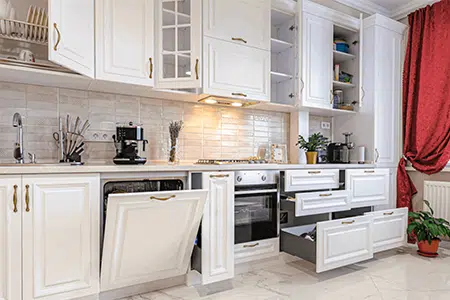
Custom cabinets mean that all of them are created according to your kitchen layout, your habits, and your style, which seems like getting clothes made just for your body.
For example, you can pick the wood, the style, the color, the hardware, and special features like pull-out shelves or unique drawers. After making a selection, you can share your layout and preferences with the kitchen cabinet maker, and they’ll offer you many design ideas for your reference, before production. This level suits people who want a one-of-a-kind kitchen and are okay with longer waits and higher spend.
Semi-Custom Cabinets
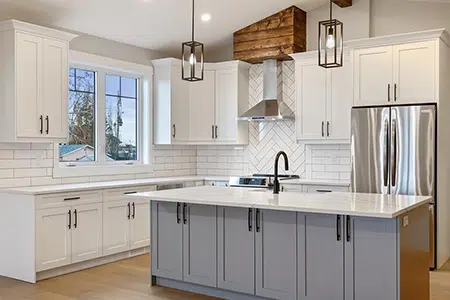
Semi-custom cabinets are a step up from ready-made ones. They start with standard cabinet sizes and basic types of kitchen units.
But, you can make some changes. You might be able to pick from more sizes than stock cabinets, like slightly different depths or widths. You can also often choose from more door styles, finishes, and accessories. They cost less than custom cabinets and take less time to get, offering a good mix of options and value.
Stock Cabinets
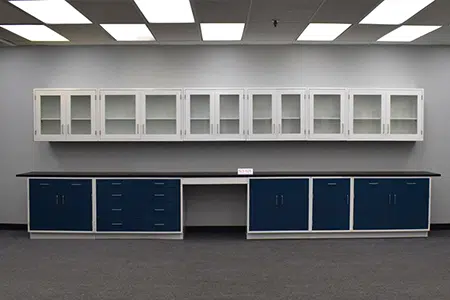
Stock cabinets are already made in standard sizes and styles. You can find them in home stores, and they are ready to take home or deliver fast. They offer the fewest choices for sizes, styles, and colors.
Because they are mass-produced, they are the fastest and cheapest option. These work well if your kitchen fits standard sizes and you like the available different styles of kitchen cabinets. They are a good choice for quick updates or budget projects.
By Packing Types
| Type | Pros | Cons |
| RTA | Costs less, easy to transport | Takes time and effort to build |
| Assembled | Ready to install, often sturdier | Costs more, and can be bulkier to move |
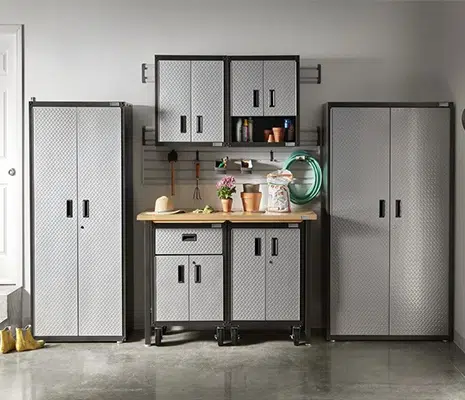
Ready to Assemble Cabinets
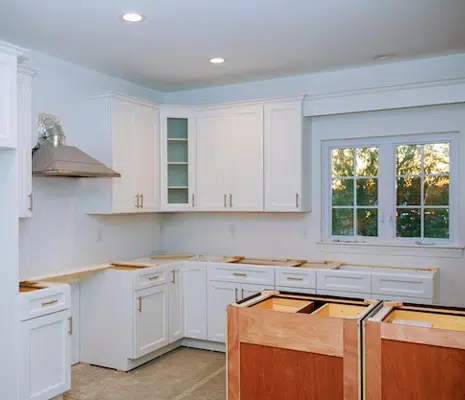
Ready to assemble (RTA) cabinets ship flat with panels, screws, and instructions. You or a handyman screw them together on site. Assembly adds a few hours of work but saves on shipping and cabinet cost. RTA units suit DIYers and budget projects.
Assembled Cabinets
Assembled cabinets come to your house already built. The workers put them together in their factory. They are strong and ready for installation right away. You don’t need to pay much time assembling it compared with ready-to-assemble cabinets.
But, assembled cabinets cost more because you pay for the building work and heavier shipping. If you need a fast, reliable install without extra labor, go assembled.
By Door Types
| Type | Pros | Cons |
| Shaker | Simple, classic, easy to clean | Less decorative than other styles |
| Slab | Modern, very easy to clean | Shows fingerprints easily, can look plain |
| Beadboard | Adds texture, cozy look | Grooves can collect dust, harder to clean |
| Raised-Panel | Traditional, detailed look | Shapes can be harder to clean |
| Recessed Panel | Clean look, more detail than slab | Similar to Shaker, might trap some dust |
| Glass-Front | Shows items, makes space feel bigger | Shows contents, glass can break, needs cleaning |
| Louvered | Unique look, allows airflow | Harder to clean slats, contents not hidden |
Shaker Cabinets
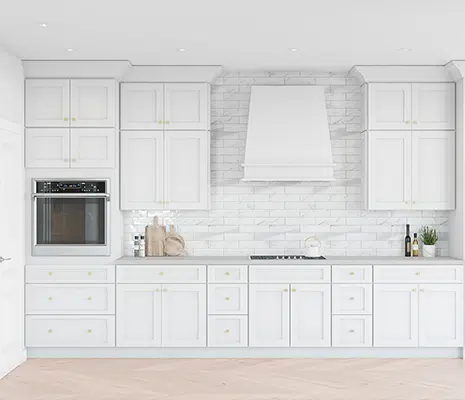
The shaker cabinet door has a flat panel in the middle with a raised frame around it. It is a simple, clean design that looks good in many different kitchen styles, from modern to traditional. The clean lines are easy to wipe down, which helps keep them looking nice.
Slab Cabinets
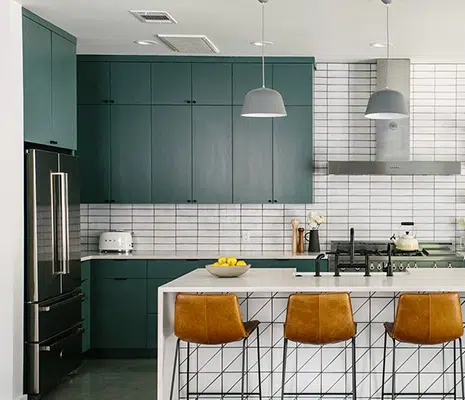
Slab kitchen cabinet doors are one flat piece with no frame or grooves. This style gives kitchens a very modern, minimalist look. Because they are flat, you just need to wipe away spills takes seconds on the smooth surface.
Moreover, you can pair slab doors with push-to-open hardware for a fully handle-free look.
Beadboard Cabinets
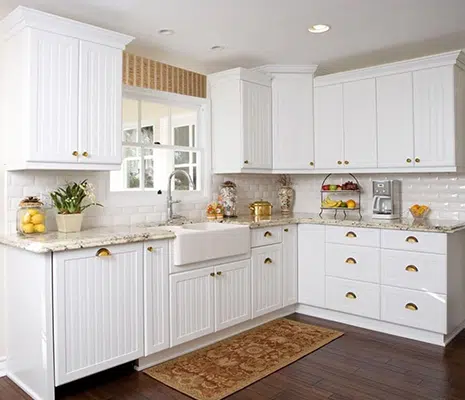
Beadboard cabinet doors look like many narrow wooden boards lined up together. They have grooves, or “beads,” running vertically down the door.
This style adds texture and gives kitchens a cozy, cottage, or country feel. They look great painted in soft colors.
Raised-Panel Cabinets
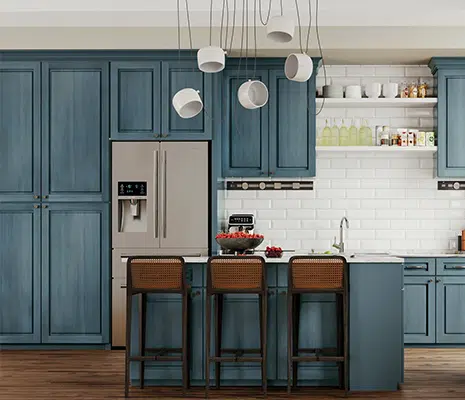
Raised-panel doors have a center panel that arches out from the frame, which style that is often paired with detailed moulding and classic hardware.
Raised panels suit traditional or historic homes. However, the extra wood layers can collect dust in corners, so clean with a small brush.
Recessed Panel Cabinet
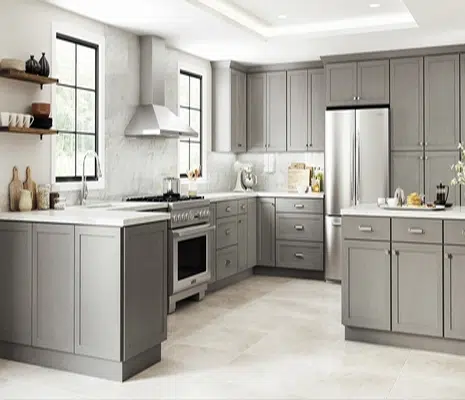
Recessed panel cabinets have a center panel that sits lower, or is “recessed,” from the frame. This is similar to Shaker doors, but the frame can sometimes be wider or styled differently.
This style offers a clean look with a bit more visual interest than a plain slab door.
Glass-Front Kitchen Cabinets
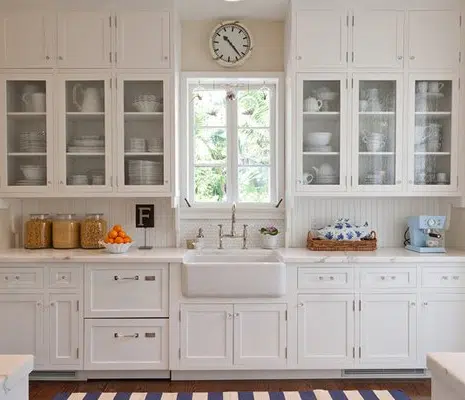
Glass-front cabinets have a glass panel instead of a solid wood panel in the door. The glass lets you see inside the cabinet, they are great for showing off nice dishes or glassware.
Or if you don’t want to show the disorganized kitchen stuff, you can use frosted glass for the cabinet door.
Louvered Kitchen Cabinets
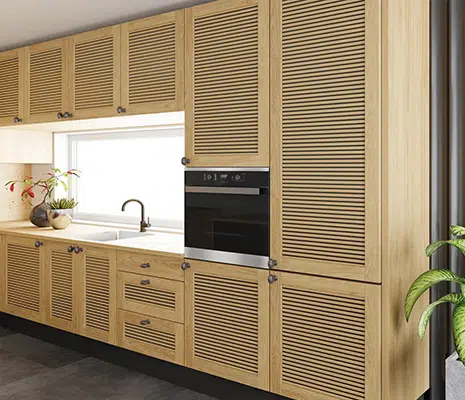
Louvered cabinets have horizontal slats, like mini shutters, in the door panel, which are often used at pantry doors, laundry areas, or cabinets near heaters for venting. They pair well with coastal, tropical, or boho styles.
By Opening Mechanism
| Type | Pros | Cons |
| Lift-Up | Saves space in front, stays out of the way | Can be hard to reach if short, complex hardware |
| Sliding Door | Saves space in front | Only half opens at a time, track gets dirty |
| Touch-to-Open | Clean look, no handles | Shows smudges from touching, and can pop open |
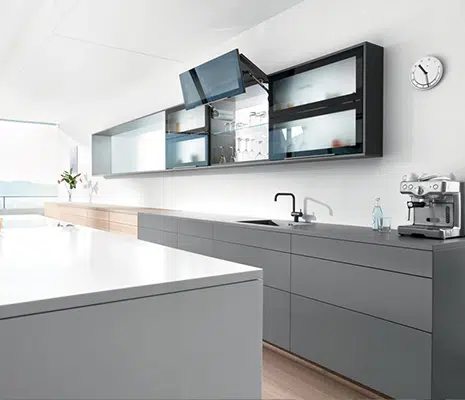
Lift-Up Cabinets
Lift-up cabinets have doors that open by lifting upwards instead of swinging outwards. These are common for wall cabinets, especially above a sink or stove.
They keep the open door out of your way while you are working at the counter below, saving head space and making the kitchen feel more open.
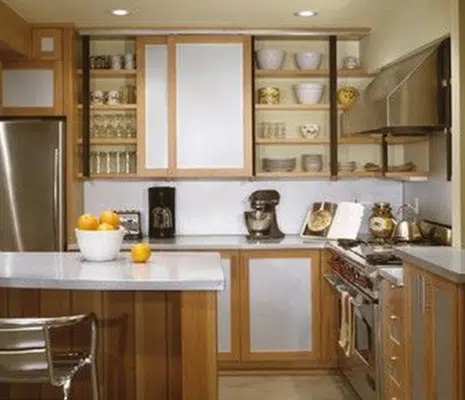
Sliding Door Cabinets
Sliding cabinet doors move sideways along the top and bottom tracks. These are really good for narrow kitchens or tight spots where a regular door would hit something when opened. But you need to regularly clean tracks to keep them smooth and sliding.
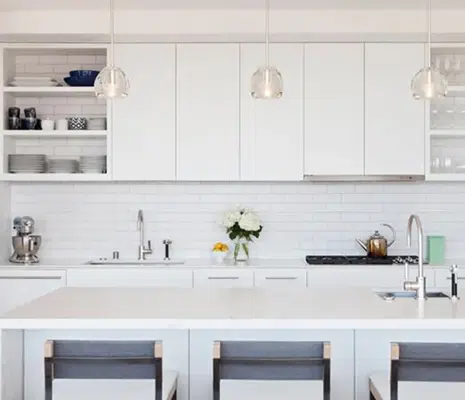
Touch-to-Open Cabinets
Touch-to-open cabinets do not have handles or knobs on the outside. You just push gently on the door or drawer front, and it pops open a little bit so you can grab it. This creates a very smooth, clean, and modern look on the cabinet faces. It’s a popular choice for minimalist kitchen designs of kitchen cupboards.
By Design Features
| Type | Pros | Cons |
| Floating | Modern look, easy floor cleaning | Less storage space, needs strong wall |
| Open Shelving | Easy access, open feel, displays items | Items get dusty, needs to be kept tidy |
| Floor-to-Ceiling | Maximum storage space | Hard to reach high parts, can look heavy |
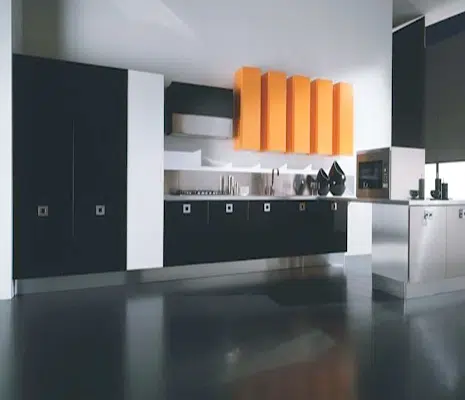
Floating Cabinets
Floating cabinets mount directly to the wall, leaving no visible base or toe kick. They look like they hover above the floor and open under the unit makes cleaning easier. This installation creates a modern, airy feel by exposing more floor.
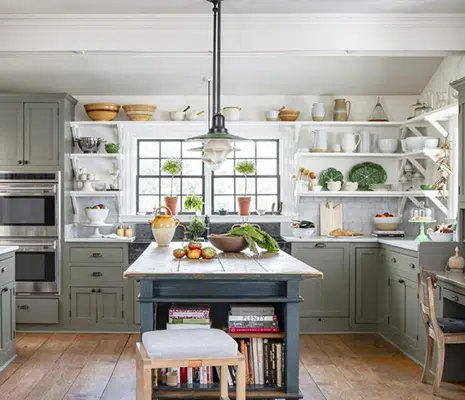
Open Shelving Style Cabinets
Open shelving cabinets have no doors on the front at all. They are just shelves fixed to the wall or as part of a cabinet frame. This style is great for displaying dishes, cookbooks, or decorative items.
It makes a kitchen feel more spacious and lets you grab items quickly. But dust in the air will cover your kitchen stuff easily.
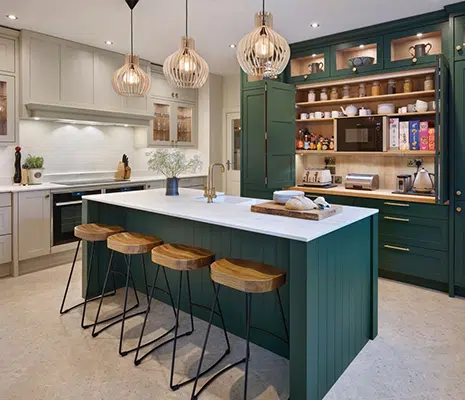
Floor-to-Ceiling Cabinets
Floor-to-ceiling cabinets stretch from the floor to the ceiling, maximizing storage space.
They provide room for pantry items, small appliances, or hidden trash bins. By filling all wall height, they remove dust gaps and create a built-in look.
By Function and Usage
| Type | Pros | Cons |
| Wall Cabinet | Uses wall space, clears counters, easy access | Hard to reach high up, not very deep |
| Base Cabinet | Holds counters, stores heavy items | Need to bend down, takes floor space |
| Tall Cabinet | Lots of vertical storage (pantry/oven) | Takes up floor space, tall doors heavy |
| Specialty | Uses tricky spots, specific jobs | Can be more complex or costly |
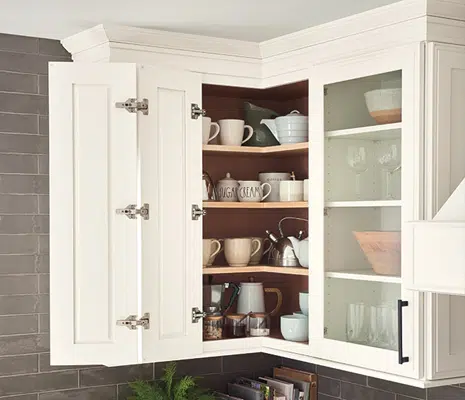
Wall Cabinet
Wall cabinets are fixed onto the wall, usually above the kitchen counter or appliances, which are used to store plates, glasses, spices, and items you need within arm’s reach. They’re typically measured 12–24 inches deep, and heights vary from 30 to 42 inches.
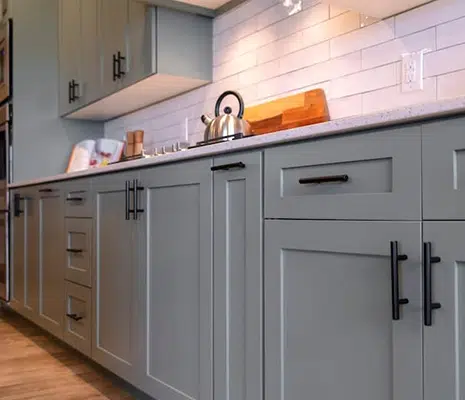
Base Cabinet
Base cabinets sit directly on the floor and hold up the kitchen countertop, their dimensions are from 34–36 inches tall and 24 inches deep.
Base cabinets form the kitchen’s workhorse, which are used for heavier items like pots, pans, small appliances, and sometimes have drawers for utensils.
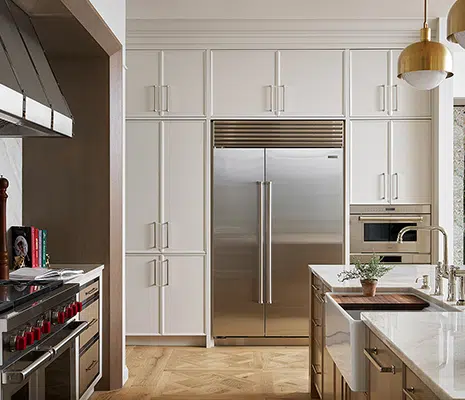
Tall Cabinet
Tall cabinets, also called pantry cabinets, stand full height—usually 84–96 inches. They often go almost to the ceiling.
They work well as pantries for food storage or as housing for built-in ovens and microwaves. Use them near the fridge or at the kitchen’s end for easy pantry access.
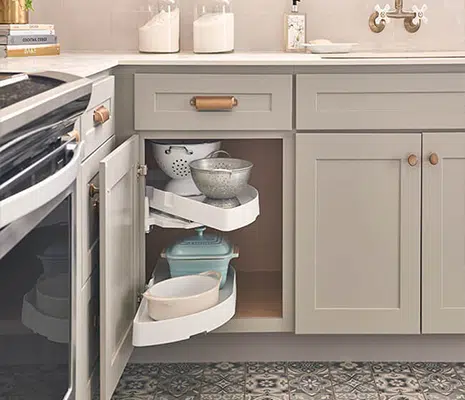
Specialty Cabinets
Specialty cabinets solve unique storage needs in your kitchen’s corners and odd spaces. Corner base cabinets use lazy Susans or pull-out shelves for easy reach.
Sink base cabinets include built-in trays for cleaning supplies under the sink. Appliance garages hide small appliances behind retractable doors. These units keep counters clear and reduce clutter.
By Material
| Material | Pros | Cons |
| Plywood | Strong, stable, good with moisture, holds screws | Costs more than particleboard/MDF |
| MDF | Smooth for paint, stable | Damaged by water, doesn’t hold screws well |
| Particleboard | Cheapest | Weakest, damaged by water easily, poor screw hold |
| Solid Wood | Most durable, can be refinished | Most expensive, changes with moisture |
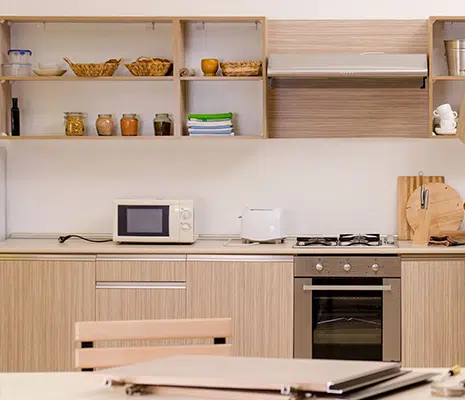
Plywood Cabinets
Plywood cabinets use layers of wood veneer glued together with grains alternating direction. This construction resists warping, holds heavy loads and it holds screws well, making it ideal for boxes and shelves.
Plywood stands up well in humid kitchens since moisture spreads across layers instead of swelling one board.
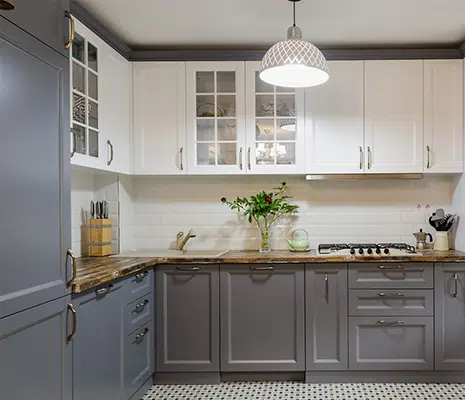
MDF Cabinets
MDF stands for Medium-Density Fiberboard. It is made from tiny wood fibers mixed with glue and pressed into a smooth board. MDF is very dense and smooth, making it great for painted cabinets because you don’t see wood grain.
However, water can make it swell, and it doesn’t hold screws as tightly as plywood or solid wood.
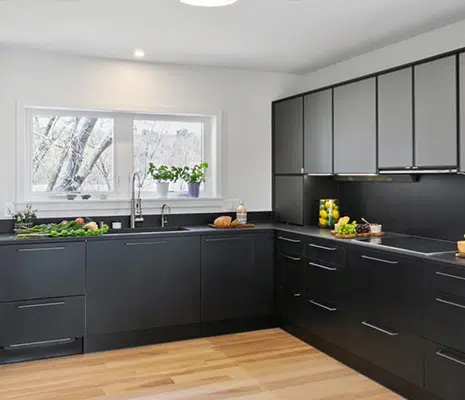
Particleboard Cabinets
Particleboard is made from small wood particles, chips, and sawdust mixed with glue and pressed together. It is the least expensive material for cabinet boxes.
Particleboard is not as strong as plywood or solid wood and is easily damaged by water. It is often used for shelves or in lower-cost stock or RTA cabinets.
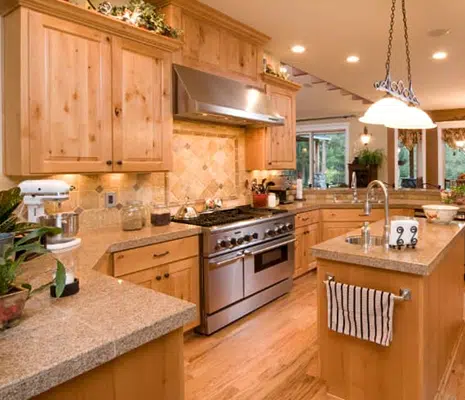
Solid Wood Cabinets
Solid wood cabinets are built from 100% natural lumber. Popular species include oak, maple, and cherry. Wood grain adds warmth and unique patterns to each door. Solid wood handles nails and screws well, but it expands and contracts with humidity changes.
By Surface Finishes
| Finish | Pros | Cons |
| Matt | Hides fingerprints, soft look | Can be harder to clean some stains |
| Glossy | Easy to clean, sleek look, reflects light | Shows fingerprints and marks easily |
| Painted | Many color choices, smooth surface | Can chip or scratch |
| Laminate | Very durable, easy to clean, many looks | Edges can chip, hard to repair |
| Melamine | Durable, scratch resistant, lower cost | Can chip, less heat options |
| Thermofoil | Seamless look, easy to clean, moisture resist | Damaged by heat, hard to repair, can peel |
| Distressed | Hides marks, adds character | Specific look, can trap dust in textures |
| Wood Veneer | Looks like solid wood for less cost | Can scratch/peel, less refinishing possible |
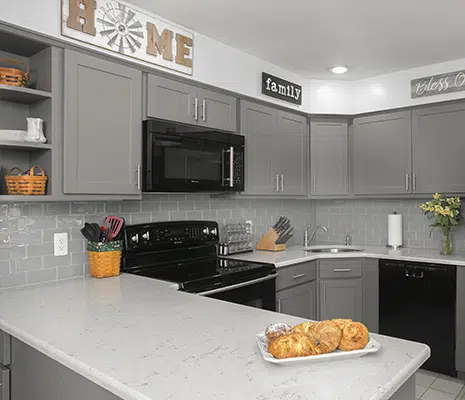
Matt Finish Cabinets
A matt finish is a paint or coating that is not shiny at all. It has a flat look. Matt finishes are good at hiding fingerprints and small marks. They give cabinets a soft, less reflective appearance.
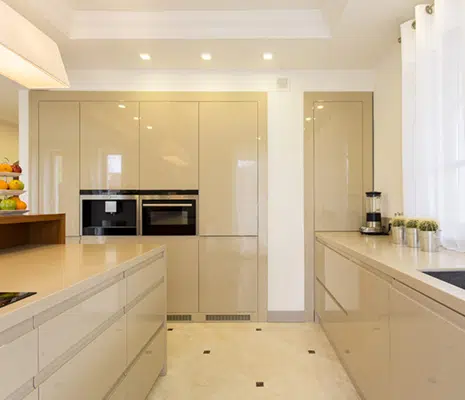
Glossy Finish Cabinets
A glossy finish is very shiny and reflective. It makes cabinets look sleek and modern.
Glossy surfaces are easy to wipe clean, but they show fingerprints, smudges, and any bumps or imperfections on the surface more easily than matt finishes.
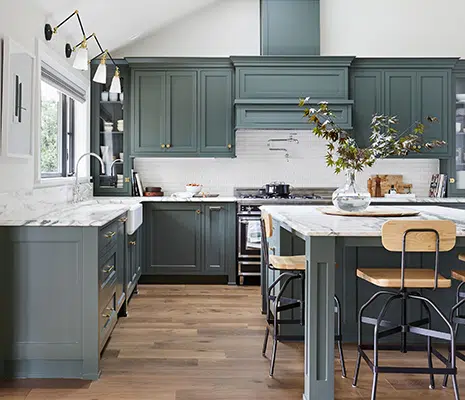
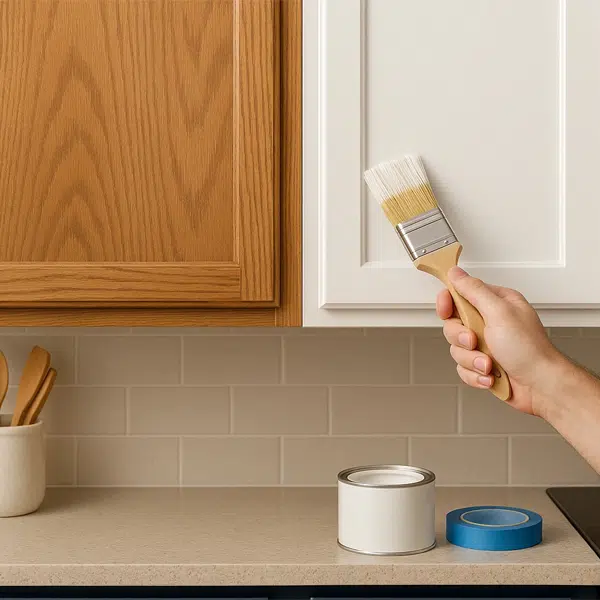
Painted Cabinets
Painted cabinets have a layer of paint applied to the wood or other material. Painting lets you choose from almost any color you can imagine.
Paint provides a smooth, even color surface. Cabinets made from MDF or smooth wood are best for painting.
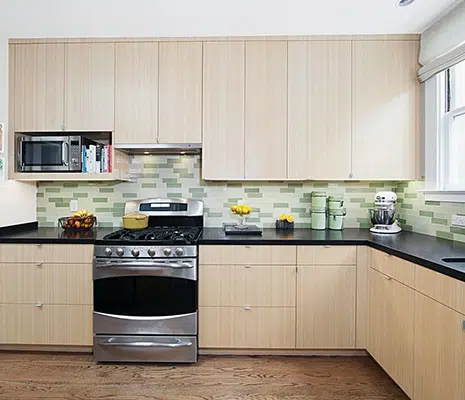
Laminate Cabinets
Laminate cabinets have a plastic-coated surface heat-pressed onto a core board. They come in many colors and patterns, including wood grain and solid hues, even textures that can look like wood or stone.
Laminate resists scratches, stains, and moisture, making it a durable, budget-friendly option.
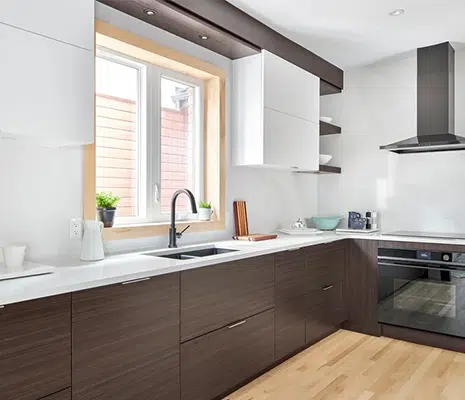
Melamine Cabinets
Melamine cabinets use paper soaked in resin pressed onto the board. This finish is smooth, moisture-resistant, and low-cost. Melamine panels resist stains and don’t fade in sunlight.
However, melamine edges can chip or peel if not sealed well. It’s common in RTA and stock cabinets.
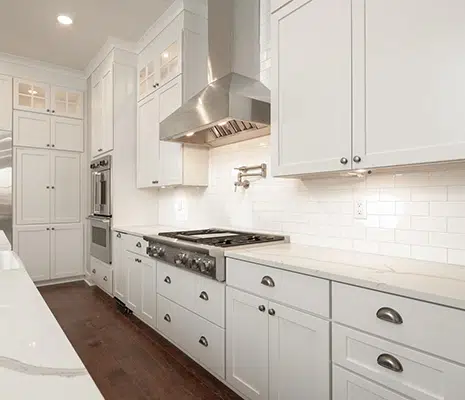
Thermofoil Cabinets
Thermofoil is a vinyl film that is heated and molded over an MDF door or cabinet piece. It wraps around the edges, creating seamless corners.
Thermofoil is smooth, easy to clean, and resists moisture. However, high heat, like from an oven with a missing heat shield, can damage or melt the film.
Distressed Cabinets
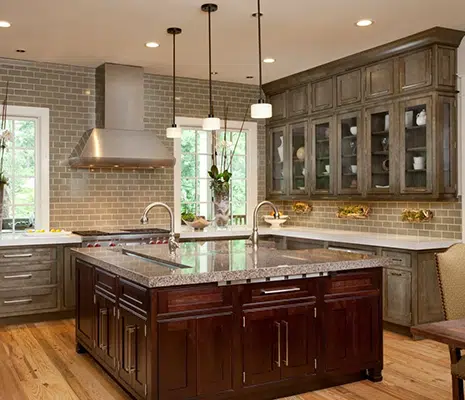
Distressed cabinets have surfaces intentionally aged with dents, worn edges, or chipped paint. This finish adds vintage or farmhouse character. Imperfections look natural and hide real wear over time.
They suit rustic or shabby-chic kitchens and bring warmth and history into modern spaces.
Wood Veneer
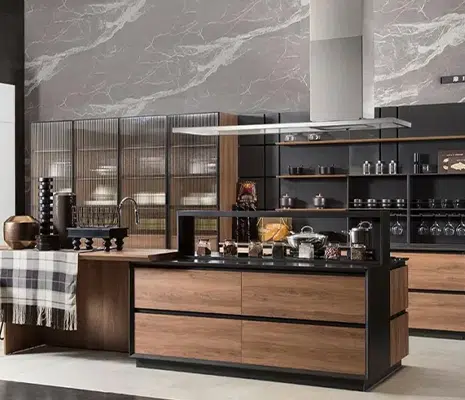
Wood veneer is a very thin slice of real wood that is glued onto a cheaper base material like plywood or MDF. It gives the cabinet the look and feel of solid wood at a lower cost. The type of wood veneer used determines the wood grain pattern you see.
By Cabinet Construction
| Type | Pros | Cons |
| Frame | Very strong, traditional look | Frame slightly blocks opening access |
| Frameless | Easy access inside, modern look | May need strong installation support |
Frame Cabinets
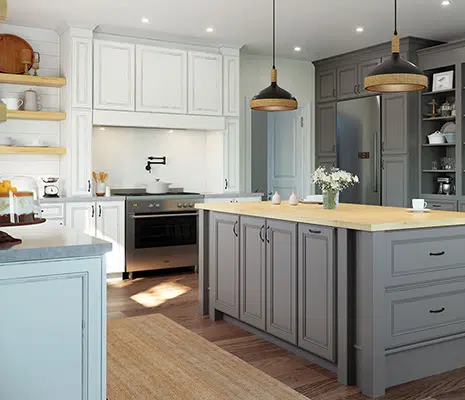
Frame cabinets feature a sturdy wooden frame around the box front. The face frame adds strength, aligns doors, and lets you choose overlay styles. Doors mount onto the frame, hiding box edges.
Frameless Cabinets
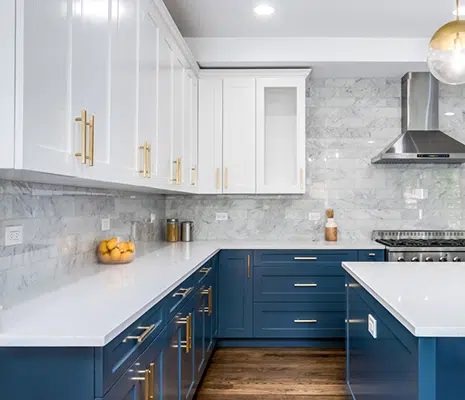
Frameless cabinets, also called European-style, remove the face frame and mount doors directly to the box sides. This style offers easier access to the inside of the cabinet because there is no frame in the way. Seamless edges and tight gaps create a sleek, modern look.
By Position of Door in Cabinet Frame
| Type | Pros | Cons |
| Partial Overlay | Common traditional look | Shows more frame, looks less sleek |
| Full Overlay | Modern, seamless look | Needs precise install, requires handles |
| Inset | Classic, high-end, flush look | Most expensive, needs perfect fit, uses space |
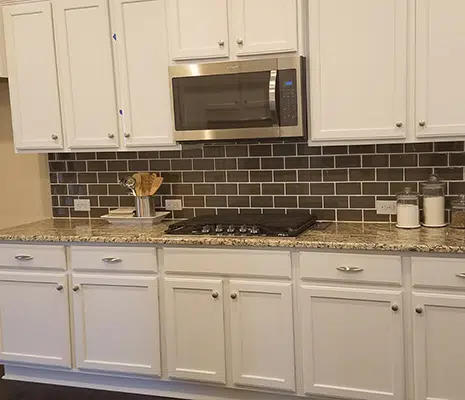
Partial Overlay Cabinet
A partial overlay cabinet is a common traditional look, has doors that cover only part of the face frame, leaving some frame visible between cabinets. This style requires simpler hinges and is often cheaper to build.
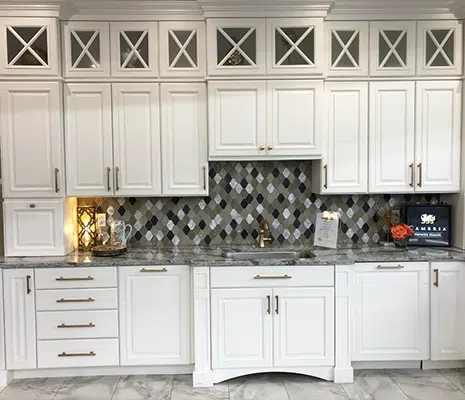
Full Overlay Cabinets
Full overlay cabinets have doors that cover nearly the entire face frame, leaving minimal gaps. This style maximizes interior cabinet space and hides most of the frame. Full overlay gives a modern, seamless look.
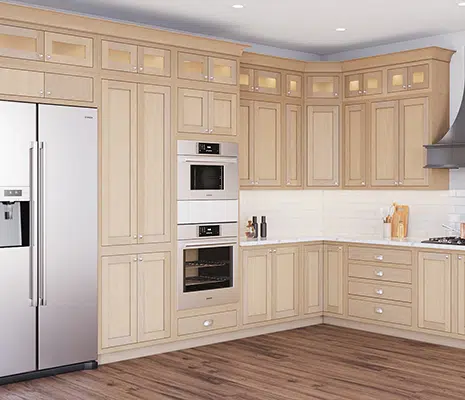
Inset Cabinets
Inset cabinets have doors and drawers that fit exactly inside the cabinet frame, sitting flush with the frame. It creates a classic, high-end look where you see the full cabinet frame around each door opening.
By Shapes
| Shape | Pros | Cons |
| U Shape | Lots of counter/storage, defined zone | Can feel closed off, corner access tricky |
| L Shape | Versatile, open feel possible | Corner access tricky, may need island |
| G Shape | Max counter/storage, can add seating | Can feel enclosed, tricky corners |
| One-Wall | Space saving, simple layout | Least counter/storage, not for multiple cooks |
| Galley | Very efficient work zone | Can feel narrow/closed in |
| Island | Adds workspace, storage, seating | Needs floor space, can block flow |
| Peninsula | Adds workspace/storage/seating, saves space | Attached end can limit flow slightly |
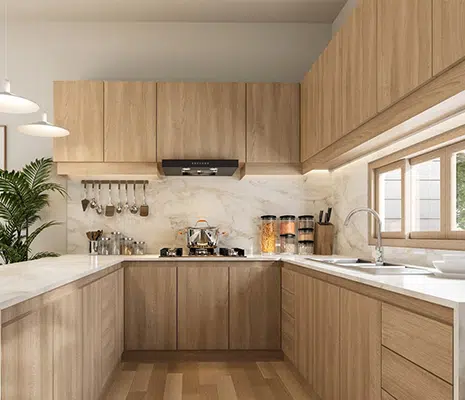
U Shape Kitchen Cabinet
A U-shape kitchen has cabinets and counters along three connected walls, forming the letter ‘U’. This layout offers lots of counter space and storage. It creates a defined work area, which is good for cooking.
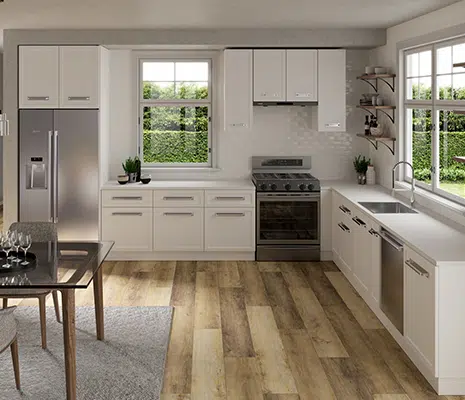
L Shape Kitchen Cabinet
An L-shape kitchen has cabinets and counters along two walls that meet at a corner, making the letter ‘L’, which offers good counter space and a natural work triangle.
Typically, this kind of layout fits small to medium kitchens by opening the room’s other sides.
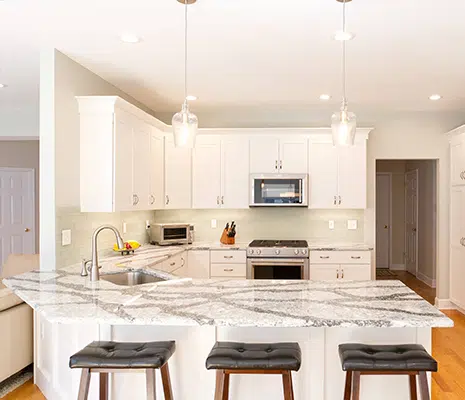
G Shape Kitchen Cabinet
A G-shape kitchen is like a U-shape kitchen but with an added counter that extends from one side, creating a fourth wall or peninsula.
This adds even more counter space and storage. The extra counter often serves as a breakfast bar or seating area, defining the kitchen space.
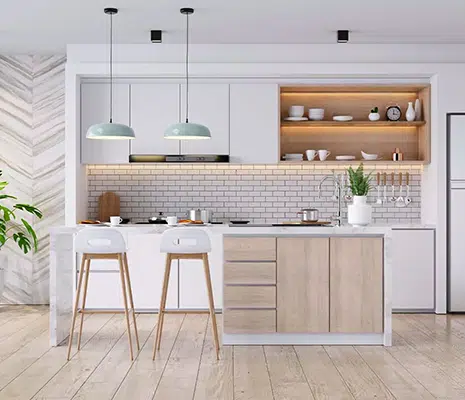
One-Wall Kitchen Cabinets
One-wall kitchen cabinets line a single wall, combining base, wall, and tall cabinets on one plane. This efficient layout fits studios, small apartments, or secondary kitchens.
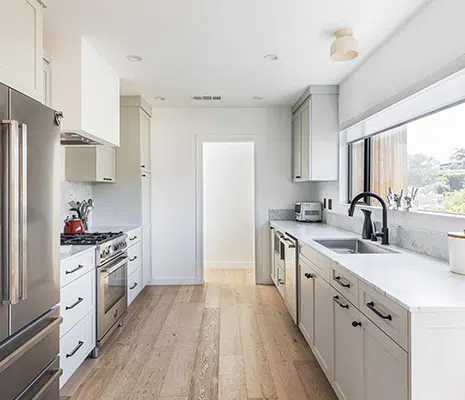
Galley Kitchen Cabinets
A galley kitchen has cabinets and counters on two walls that are directly across from each other, with a walkway in between. This layout is very efficient because everything is just a step or two away.
It’s a common design in older homes and efficient for cooking but can feel narrow.
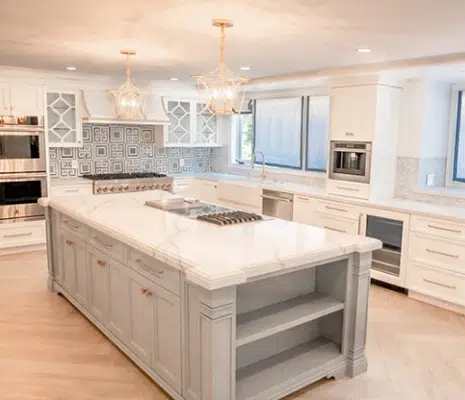
Island Kitchen Cabinets
An island kitchen includes cabinets or a counter in a freestanding unit placed in the middle of the room. They offer extra prep space, storage, and seating.
Islands can house sinks, cooktops, or dishwashers. Add drawers, shelves, or wine racks to make islands multifunctional.
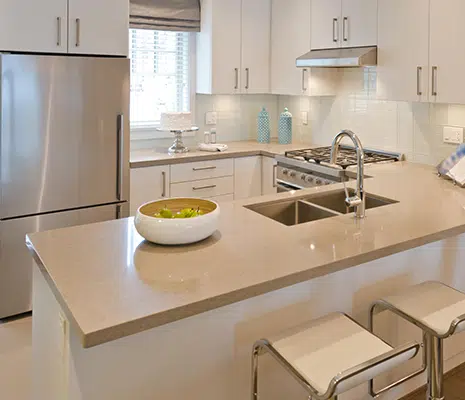
Peninsula Kitchen Cabinet
A peninsula kitchen cabinet is a counter with cabinets underneath that sticks out from a wall or another set of cabinets. It is attached on one end and open on the other.
It’s like half of an island, adding counter space and often seating without needing as much open floor space as a full island.
Conclusion
After learning about 45 cabinet types, you’re ready to pick kitchen cabinets that look great and work well. Thinking about how they are made, the door styles, the materials, and the layouts helps you choose the best ones.
If you want to customize your kitchen cabinet for your upcoming project, you can contact AJ Flying to find a solution.
FAQs
1. What are the most popular types of kitchen cabinets?
Shaker style is very popular because it is simple and fits many looks. Slab doors are also common for modern kitchens. Raised panel is a classic choice for traditional homes.
2. Which cabinet material is best?
Plywood is strong and stable for cabinet boxes. Solid wood is durable but costs more. MDF is good for painting but can swell with water. The “best” depends on your budget and needs.
3. Are RTA cabinets hard to assemble?
Putting RTA cabinets together takes time and basic tools, like a screwdriver. They come with instructions, but it require patience to build them correctly.
Related Resouces
Popular Color of Cabinets – AJ Flying Home
Types of Kitchen Hardware -Signaturehardware
Complete to Know Kitchen Cabinet – Wikipedia
 English
  German
  French
  Spanish
  Portuguese
  Turkish
  Dutch
Dutch