
Introduction
Learning how to adjust cabinet door hinges can make a big difference. You will be able to solve those problems, such as cabinet doors scraping against the frame, cabinet doors hanging a little crooked, or not closing just right, and door shift and gaps or gaps or making them bump into each other.
Follow the guide below, your cupboard door will look and work much better.
Prepare The Tools You Need
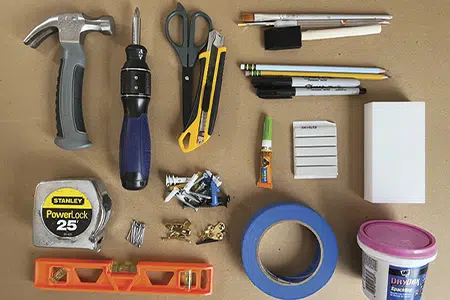
You need a few common items to adjust the hinges on kitchen cabinets. Below is a list of tools and how each one helps you fix the hinges.
- Phillips-head screwdriver: This is the most common tool you’ll need. Most cabinet hinge screws have a cross shape on top, and this screwdriver fits them.
- Hammer: You might not need this, but it can be handy. If a wooden shim is needed for very old cabinets or if a hinge is slightly stuck, a gentle tap can help. Always be very careful when using a hammer near cabinets.
- Level: A small level is very useful. It helps you see if the cabinet door is perfectly straight up and down or straight across.
- Screws: Sometimes, the old screws in the hinges can get worn out or stripped. It’s a good idea to have a few new wood screws of the same size on hand, just in case you need to replace one.
Check Out Hinge Types Before Beginning
Before you start, check what type of hinges your cabinet uses, because learning which hinge you have helps you know where to find the adjustment screws., and you will be able to adjust close.
Some cabinets have simple hinges that only let you move the door a little. Other cabinets have fully adjustable hinges. Fully adjustable hinges, such as European hinges, let you move the door three ways: up or down, side to side, and in or out. When you use these hinges, you can fix any gap or rubbing. Overlay hinges sit on top of the frame, and inset hinges fit inside.
How to Adjust a Cabinet Door Up or Down
Cabinet doors can start to sag or hang unevenly. This often happens from everyday use, and the weight of the door itself can put a strain on the hinges over time. You can follow below 4 steps below to solve this kind of problem.
Step 1: Find the Hinges
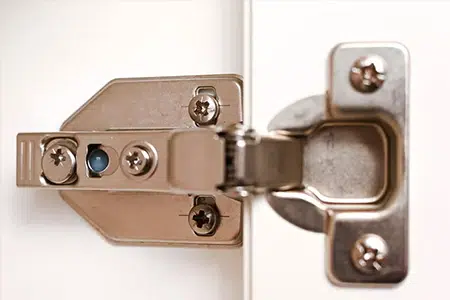
First, look at your cabinet door. You will see hinges that connect the door to the main cabinet box. Most doors have at least two hinges, one near the top and one near the bottom. These are the parts you will be working with. Make sure the area is clear so you can open the door easily.
Step 2: Loosen the screw
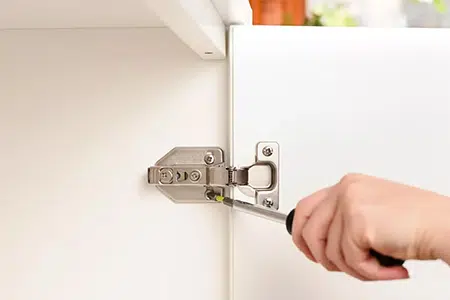
Use your Phillips-head screwdriver to loosen the vertical-adjustment screw on each hinge. Turn the screw counter-clockwise about a quarter turn. Do not remove the screw fully to prevents the hinge from falling; just loosen it enough so the hinge can move. When the screw is loose, the hinge plate can slide up or down, now you can adjust the door height.
Step 3: Adjust the Door
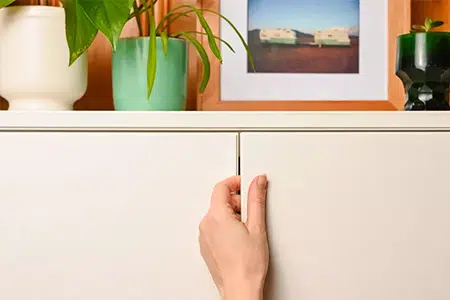
With the screws slightly loose, gently lift the cabinet door if it is too low, or press down carefully at the hinge point if it is too high. The door should slide up or down along the loosened screws. Move it a tiny bit at a time until it looks like it’s at the right height.
Step 4: Use Level to Test
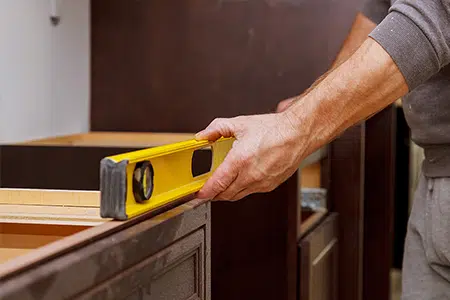
Now, take your level and place it on top of the cabinet door to see if it’s straight. If it’s not level, adjust the door a little more. Once the door is level and at the correct height, carefully tighten the screws on both hinges that you loosened earlier. Turn them clockwise until they are snug.
How to Adjust a Cabinet Door Side to Side
If you see an uneven gap next to your cabinet door, or if the door bumps into another door, you need to adjust side-toside screws to center the door. This is a common fix for a cupboard door hinge adjustment.
Step 1: Locate the Side-to-Side Screw
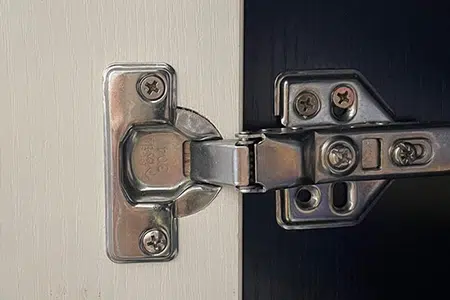
The side-to-side adjustment screw sits near the hinge plate. It is usually closer to the cabinet’s front edge. Some hinges have a small cover you must pop off to see this screw. When you find the screw, you know where to adjust to move the door left or right.
Step 2: Loosen the Screw
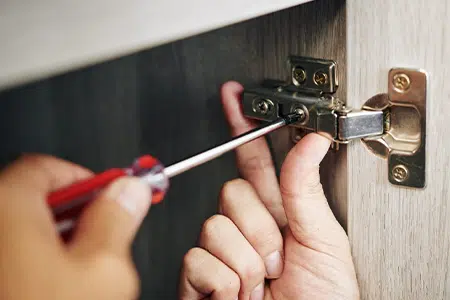
Once you find the side-to-side adjustment screw on the top hinge, turn it slowly. Gently slide the door left or right to center it. Check the gap between the door and the cabinet frame as you slide, then adjust it until the gap looks even, then do the same for the bottom hinge. When the door edge looks even, stop sliding.
Step 3: Tighten the Screw
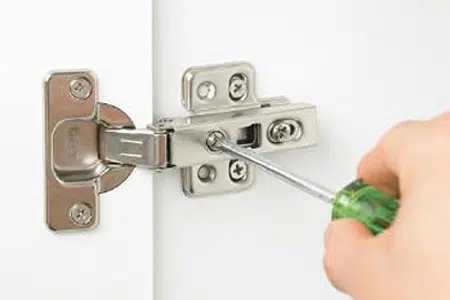
Turn the side-to-side screw clockwise slowly to make sure the door does not move when you tighten it, and don’t forget to check that the gap remains even as you tighten. A properly tightened screw holds the door in its new centered position. Open and close the door to see if it swings freely without rubbing. If the door still shifts, loosen the screw again and repeat the slide-and-tighten steps.
How to Adjust a Cabinet Door In or Out
Some cabinet doors stick out or sit too far in, causing catch points. Adjusting the door in or out fixes this. These steps show how to move the door closer or farther from the frame.
Step 1: Locate the Screw
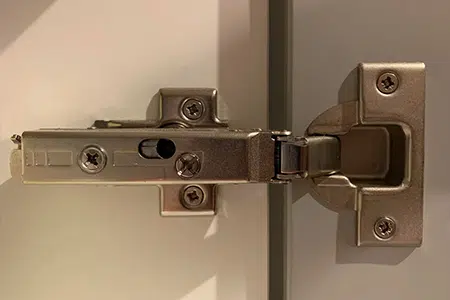
For this adjustment, you’ll need to find a different screw on the hinge. This screw is usually found towards the back of the hinge, further away from the cabinet door itself. It controls how close the door sits to the main cabinet box. Turning this screw changes the depth of the door.
Step 2: Loosen Screw for Position
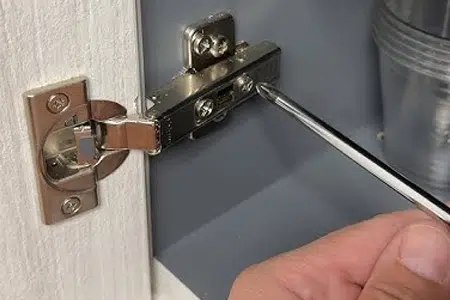
Turn this depth adjustment screw slowly. Pull the door lightly to make it sit farther out, or push it softly to sink it in. Only move a few millimeters at a time. After each movement, check how the door sits.
Step 3: Secure the Screw
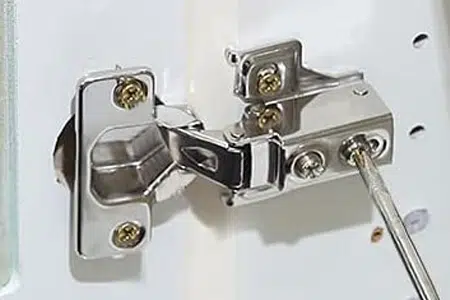
After moving the door in or out, tighten depth-adjustment screw clockwise. Check that the gap between the door and the cabinet frame is even. If you need more change, repeat the loosen-and-push or pull steps until the door sits flush.
Test Your Cabinet Door
After making any adjustments, it’s vital to test your cabinet door. Open and close it several times. Make sure it swings easily without scraping or bumping. Check that it lines up neatly with the cabinet frame and any surrounding doors when it’s closed. This double-check ensures your cupboard door hinge adjustment was successful and the door is secure.
Common Door Hinge Problems That Cause Misalignment
Many issues can cause doors to misalign. Spotting these issues helps you know when to adjust hinges or do repairs. Look for these signs:
- Gaps around the door: When gaps are larger at the top, bottom, or sides, the door sits unevenly.
- Scuff marks: Rubbing against the cabinet frame leaves marks on the edges.
- Creaky doors: Squeaking sounds show hinge pins or plates need tightening or lubrication.
- Uneven alignment: One side of the door may stick out more than the other.
- Sagging: The door hangs lower on one side, often from loose or worn hinges.
- Difficult to open: If you must push or pull hard, the hinges may be off.
- Loose hinges: Wobbly hinges let the door shift out of place.
How to Maintain Your Cabinet Doors
Keeping your cabinet doors in good shape means they last longer and remain aligned. Follow these tips:
1. Tighten your screws periodically: About every six months, take a screwdriver and gently check if any hinge screws are loose. If they are, tighten them up, but don’t make them too tight.
2. Inspect for wear and tear periodically: Look at your hinges sometimes. If you see any rust, bent parts, or very worn-out pieces, you might need to change the hinge.
3. Avoid undue force: Try not to slam your cabinet doors shut or hang heavy things on the cabinet door. This can put a lot of stress on the hinges and make them go out of line.
4. Use door stoppers: Small felt or rubber bumpers on the inside of the door or frame can make the door close softly. This protects the hinges.
Conclusion
You learned how to move doors up or down, side to side, and in or out. But the most important thing is to regularly inspect and use tools to fix it when it’s not under big problem, which can let your cabinet doors be straight and smooth.
FAQs
How to adjust surface-mount cabinet hinges?
It’s easy to adjust surface-mount hinges because they are often visible on the outside of the cabinet. Follow the above steps, and you can easily adjust them.
Related Resouces
Types of Cabinet Door Hinges – Hardware Source
Simple Way to Adjust Cabinet Hinges – WikiHow
 English
  German
  French
  Spanish
  Portuguese
  Turkish
  Dutch
Dutch