
Introduction
The difference between a cabinet that looks store-bought and one that looks custom-built often comes down to one detail: the trim work. Gaps between your cabinets and walls instantly give away a rushed installation.
This guide will explain what cabinet scribe molding is, why it’s necessary, and provide a step-by-step tutorial on how to install it perfectly.
What is Cabinet Scribe Molding?
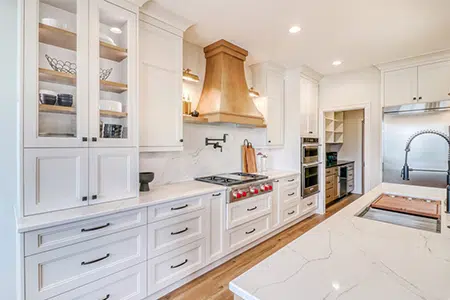
Cabinet trim strips are thin, elongated decorative strips, usually around 3/4 inch wide or less. The profile is typically concave or has an angular shape. This molding sits between your cabinet edges and the walls or ceiling.
The main job of scribe molding isn’t decoration. It hides the small gaps that appear when you install cabinets against walls that aren’t perfectly flat. Every wall has bumps, dips, and angles that create these spaces.
Common materials include:
- Wood – Matches stained cabinets perfectly, easy to cut and shape
- MDF – Takes paint well, costs less than solid wood, good for painted kitchens
- PVC/Plastic – Resists moisture, works well in humid areas or near sinks
You’ll find scribe molding along cabinet sides where they meet walls. It also fits between cabinet tops and ceilings. Some installers add it around kitchen base cabinets where they meet flooring transitions. The molding is different from crown molding—it solves a practical problem first, though it looks attractive when installed correctly.
Why Scribe Molding is Mandatory
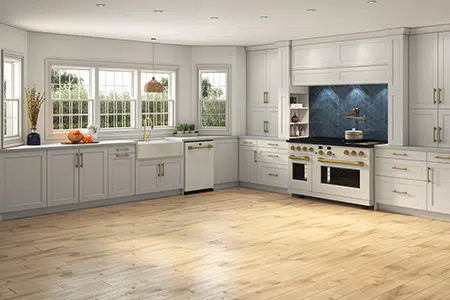
Here’s something most homeowners don’t realize: walls are never truly straight. Even in new construction, you’ll find curves, bumps, and off-plumb sections. Older homes can have walls that lean or bow by half an inch or more.
Without scribe molding, these gaps become obvious problems. Dust collects in the spaces. Small items slip behind the cabinets and become impossible to retrieve. The whole installation looks incomplete.
Some expensive shaker kitchen cabinets that cost thousands of dollars look cheap because the installer skipped this step. The eye naturally notices these gaps, even if someone can’t explain what looks wrong.
Scribe molding creates a seal along these edges. It makes your cabinets look like they were built specifically for your kitchen walls. This single detail can make a basic cabinet installation look like custom work from a specialist. That sealed edge also keeps cooking oils and grime from building up in hidden cracks.
Tools and Materials Checklist
| Tool/Material | Purpose | Notes |
| Scribe molding | The trim piece itself | Buy 10-15% extra for waste |
| Miter saw | Cutting molding to length | Jigsaw works too |
| Coping saw | Inside corner cuts | Optional but helpful |
| Tape measure | Measuring cabinet runs | Get one with lock feature |
| Pencil | Marking cut lines | Sharp pencil for accuracy |
| Scribing compass | Tracing wall contours | Most critical tool |
| Brad nailer | Attaching molding | Hand nails work too |
| Finishing nails | Securing the molding | 1 to 1.5 inch length |
| Wood glue | Extra holding power | Use on cabinet edge |
| Caulk | Final sealing | Match cabinet color |
The scribing compass is your most critical tool. This simple device has two legs—one with a pencil, one with a point. It lets you transfer the exact shape of your wall onto the molding.
Step-by-Step Installation Guide
Step 1: Measure and Cut Rough Length
Measure the full length where your molding will go. Run your tape measure along the cabinet edge from end to end. Write down this measurement.
Cut your molding piece about 1 to 2 inches longer than this measurement. The extra length gives you room to adjust if your first scribe cut removes more material than expected.
If your cabinet run has outside corners, cut 45-degree miters on these ends now. These corner joints should meet at a perfect right angle. Test your miter saw angle on scrap pieces first.
Step 2: Set Up the Scribe
Hold your cut molding against the cabinet edge where it will be installed. Don’t attach it yet. Just position it so you can see where the gaps are between the molding and the wall.
Look for the widest gap along the entire length. Set your scribing compass to match this widest gap distance.
Here’s the technique: Keep the compass legs at this exact distance. Place the pointed leg against the wall surface. Let the pencil leg rest on the face of your molding. Now slowly move the compass along the wall, keeping the point touching the wall at all times. The pencil will draw a line on your molding that matches every bump and curve in that wall.
This scribed line shows exactly how much material to remove. When you cut along this line, the molding edge will fit the wall perfectly.
Step 3: Make the Scribe Cut
The line you just drew is your cutting guide. You need to remove all the material on the waste side of this line—the side between the line and the edge of your molding.
Use a coping saw for curved sections or a jigsaw for longer runs. Cut carefully, staying just on the waste side of the line. Leave the pencil line visible on your finished piece.
Here’s an expert tip: Angle your saw slightly so the cut creates a small back bevel. This means the face of the molding will make contact with the wall first, while the back edge has a tiny bit of clearance. This helps the molding press tightly against uneven surfaces.
After cutting, sand the edge lightly with 120-grit sandpaper. Remove any rough spots or splinters. Similar precision matters when you adjust cabinet door hinges—small adjustments make big differences.
Step 4: Test Fit and Adjust
Hold your newly cut molding back in position. Press it against the cabinet edge and check how it fits against the wall. You want to see little to no gap—maybe 1/16 inch at most.
If you still see gaps larger than this, you need to remove more material. Set your compass to match the remaining gap and repeat the scribing process. Even experienced installers sometimes need two or three passes to get a perfect fit.
Don’t rush this step. A tight fit here means your final installation will look professional.
Step 5: Final Installation
Once your test fit looks good, apply a thin bead of wood glue along the back edge of the molding—the part that will contact your cabinet. Use just enough glue to create a bond without squeeze-out.
Position the molding carefully and secure it with finishing nails or a brad nailer. Along the length, place nails every 12 to 16 inches. Angle the nails slightly toward the cabinet so they bite into solid material. If you’re hand-nailing, use a nail set to drive the heads slightly below the surface.
The glue provides holding strength. The nails hold the piece in position while the glue dries.
Finishing Touches
After your molding is installed, fill all the nail holes. Use wood putty that matches your cabinet stain color, or use white putty if you’re painting. Apply the putty with your finger, pressing it into the hole.
Run a thin bead of caulk where the molding meets the wall or ceiling. This seals any microscopic gaps that remain. Use your finger to smooth the caulk bead. Have a damp cloth ready to wipe excess caulk off the wall immediately.
If your kitchen cabinet materials are stained wood, you might need to stain the molding to match. Do this before installation if possible. If you’re working with painted cabinets, a final coat of paint over the installed molding blends everything together.
These finishing steps take an extra 15 to 20 minutes but make scribe molding disappear visually while still doing its job.
Conclusion
Scribe molding separates amateur cabinet installation from professional custom work. The scribing technique takes practice to master, but the results speak for themselves. Your cabinets will look built-in and finished rather than simply installed.
For custom cabinet solutions or professional installation guidance, reach out to AJ Flying—a leading manufacturer with expertise in quality cabinet construction and details that matter.
 English
  German
  French
  Spanish
  Portuguese
  Turkish
  Dutch
Dutch