
Do you hesitate to choose framed or frameless cabinets for remodeling your kitchen?
We’ve broken down everything about framed vs frameless cabinets in this guide. You’ll learn the definition and main differences between design, construction, cost, and maintenance etc.
Keep reading and find which one is best for you.
What is a Framed Cabinet?
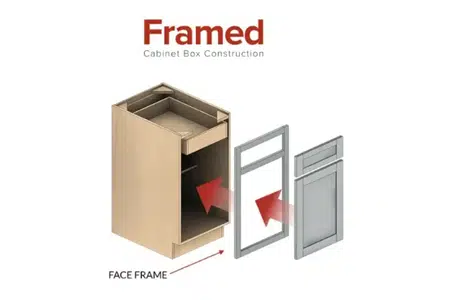
Framed cabinets are also called face-frame cabinets. You see horizontal and vertical strips around the door and drawer opening, and the door attaches to that frame.
Key Features:
- Face frame covers the front edges of the cabinet box
- Doors and drawers fit inside or overlap the frame
- The hinges are attached to the face frame
Pros and Cons of Framed Cabinets
| Pros | Cons |
| Strong, sturdy build | 1″–3″ less internal space |
| Fits traditional to modern looks | Frame may hide some hardware |
| Wide door options (inset/full) | Slightly less full-access feel |
| Installs in ~2–3 days | Limited full-access storage |
What Is a Frameless Cabinet?
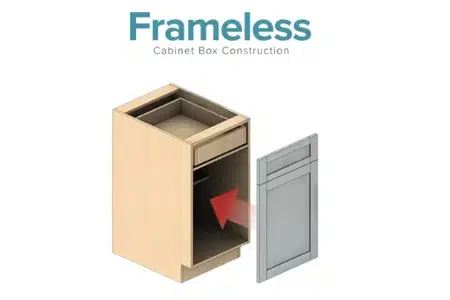
You can see that there is no face frame in the cabinet, and the cabinet doors attach directly to the cabinet box sides. This gives your kitchen a neat, continuous appearance. It’s a frameless cabinet.
Europeans developed this style after World War II for saving materials and max utilize storage space in small homes. That’s why it is called “European-style” cabinets.
Key Features:
• No face frame on the cabinet front
• Doors cover the entire cabinet box front
• The hinges are attached to the cabinet sides directly
Pros and Cons of Frameless Cabinets
| Pros | Cons |
| Up to 3″ more drawer width | Hinges need tuning twice a year |
| Sleek, clean lines | Fewer door style choices |
| Full-access shelves and drawers | Installs in ~5 days or longer |
| Modern look fits minimalist homes | Costs about 15–20% more than framed |
Framed vs Frameless Cabinets: Main Differences
Appearance and Style
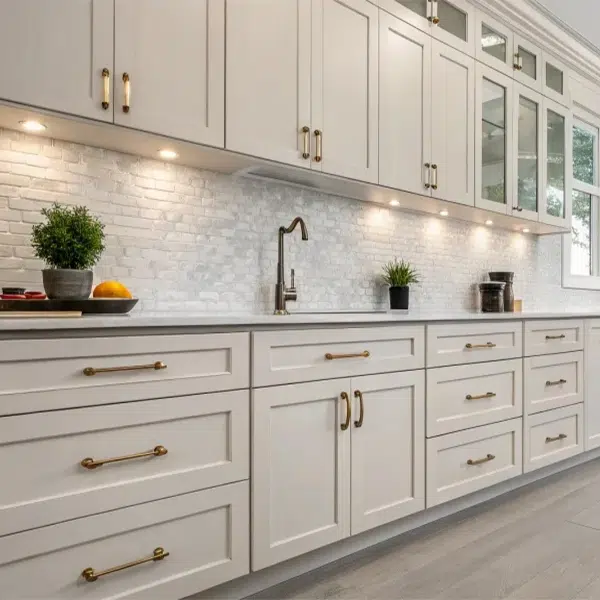
Framed cabinets work with almost any kitchen style. This is most often the way we see framed cabinet styles used since they offer natural lines. I have installed framed cabinets in traditional farmhouse kitchens, beach cottages, transitional, and even some modern style designs.
Frameless cabinets offer seamless lines throughout your kitchen. This works best with modern, minimalism, and contemporary design styles, which uses the cabinet fronts to create a clean and larger looking space. The clean and smooth surfaces work well with other stylish elements found in the home, such as quartz countertops or stainless steel appliances.
Construction
Frameless construction cabinets attach hinges directly to the cabinet box sides, which requires very specific and detailed construction as well as good quality hinges that can support the weight of the door without sagging.
Storage Space Comparison
For actual storage space differences in a standard 24-inch wide cabinet:
- Framed cabinet drawer dimensions: 21-22 inches
- Frameless cabinet drawer dimension: 24 inches
A difference of 2-3 inches might not seem like much, but it affects the entire kitchen. In a kitchen with 20 drawers, you lose about 40-60 inches of storage width with framed cabinets.
Shelf Space Shelf space remains about the same in both cabinet types. The face frame doesn’t affect shelf depth or height.
Cost Comparison
A frameless cabinet costs 15-20% more than a similar framed cabinet in regards to the purchase price, and the install cost of a frameless cabinet is more expensive.
Installation Time and Complexity
Most kitchen cabinet installs of framed cabinets take 2-3 days. Installation of framed cabinets only requires basic carpentry skills.
Frameless installations typically take 5+ days. Since there are no face frames to conceal gaps, every cabinet must align as precisely as possible. This installation requires advanced installation knowledge and specialized tools.
Durability and Strength
A framed cabinet is stronger than a frameless cabinet, as the face frame acts like a reinforcement beam across the cabinet front. This added structure also helps to prevent cabinet boxes from twisting or the effects of sagging.
However, if the frameless cabinet is built out of quality materials, it can last just as long as a framed cabinet.
Maintenance Requirements
Framed cabinets have limited maintenance requirements as the face frame keeps the cabinets doors aligned and when installed properly, hinge adjustments are rare. A little bit of annual cleaning and hinge lubrication keeps framed cabinets humming along nicely for decades.
Meanwhile, the frameless cabinet will require the adjustment of frameless cabinet hinges every six months, there are about 30 minutes for each cabinet for this. This is because door alignment can shift when the house settles or cabinet boxes move slightly, causing cabinet doors looking crooked or not closing properly.
Door Style Choices
Framed cabinets offer three mounting options, giving them a more tailored choice for your kitchen.
- Inset Doors
- Partial Overlay
- Full Overlay
While frameless cabinets typically use full overlay doors only. Their doors must cover the face of the cabinet box to eliminate the raw edges.
Choosing Framed or Frameless Cabinets?
Considerations on kitchen space
Small kitchens: If your kitchen is somewhat small and you are constrained in space, and wish to maximize your storage, then framed cabinets could be an option. The 1-3 additional inches of each cabinet in drawer width can be a big difference if space is limited.
Large Kitchens: Both cabinet types work well in large kitchens. Select based on the style you prefer and budget, rather than whether one provides more storage than the other.
Narrow cabinets: Frameless cabinets are more favourable in narrower spaces, such as laundry rooms or pantries where maximum storage width is important.
Kitchen Style Preference
Framed cabinets are more suitable for:
- Farmhouse kitchens
- Traditional colonial styles
- Cottage / country kitchen
- Transitional designs that blend classic styles and modern styles.
The face frame lines are complementary to traditional design elements such as crown molding, door styles, decorative hardware and incorporate other traditional features.
Frameless cabinets are more suitable for:
- Contemporary kitchens
- Minimalist designs
- Mid-century modern styles
- Industrial kitchens
Clean lines are a hallmark of modern design and consistent with various modern components such as flat panel doors, sleek hardware and appliances integrated into cabinetry.
Budget Planning
If budget is your primary consideration, then go with framed cabinets. Compared to other kitchen improvements, a large improvement can benefit greatly from saving 15-20%.
With the money you saved on framed cabinets, it would help pay for upgrades on your counters, appliances, or flooring instead.
Glass Cabinet Doors
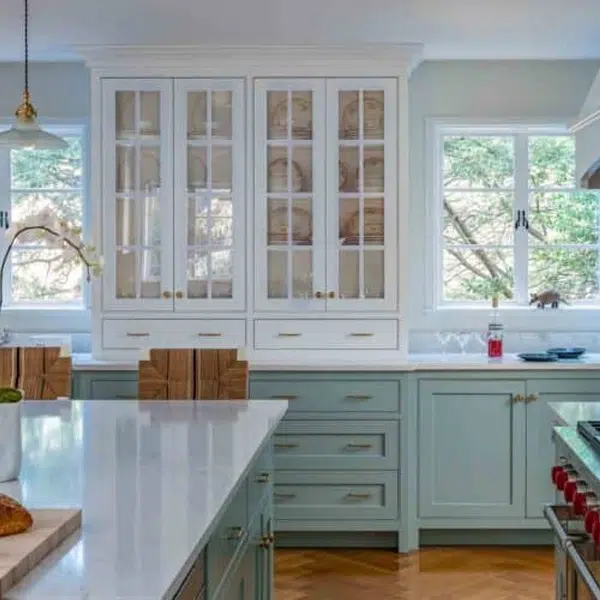
Choose framed cabinets if you want glass doors in your kitchen. The face frame hides the hinges and creates a cleaner look with glass panels.
With frameless cabinets, hinges attach directly to the glass door frame. This creates visible hardware that can look cluttered.
Final Thoughts
Whether to choose framed or frameless cabinets depends on your personal preference. Which one is best for you? I do believe that you already have an idea in your mind after reading about this complete comparison.
If you want to remodel or have a new business that requires framed or frameless cabinets, contact AJ Flying to get the best support.
FAQs
1. Comparing frameless and framed cabinet hinges?
Hinges of the framed cabinet are fixed in the face frame, but the hinges of the frameless are fixed in the side of the cabinet box. Frameless hinges are typically European-style hinges that offer more adjustment options but call for frequent upkeep and more accurate installation.
2. Lifespan of frameless and framed cabinets
They can both last 20-35 days, if they’re made of durable and quality material.
3. Is a frameless cabinet worth investing in?
Whether to spend more money on a frameless cabinet depends on whether you need more storage space or a simple design. If not, then consider a framed cabinet.
4. Is it possible to mix framed and frameless cabinets?
Mixing framed and frameless cabinets in the same kitchen is not recommended. An uneven appearance is produced by different construction methods and aesthetics.
 English
  German
  French
  Spanish
  Portuguese
  Turkish
  Dutch
Dutch