
Introduction
Shaker vs flat panel cabinets, don’t know which one is the best for you?
Here we’ll talk about what Shaker cabinets are, what flat-panel cabinets are, their pros and cons, and how to pick between Shaker cabinets vs flat-panel cabinets. No overwhelm—just clear info, questions, and answers. Ready? Let’s go
Definition of Shaker Cabinets
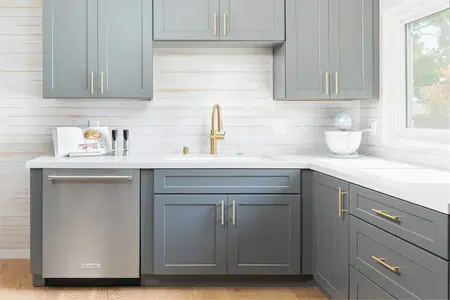
It’s a cabinet door design with a frame around a flat or recessed center panel—kind of like a picture frame with a flat rectangle inside. You’ll see a five-piece door: two vertical pieces (stiles), two horizontal pieces (rails), and one center panel. There are no crazy curves or carved details—just straight lines that look neat and last a long time.
Why People Like Shaker Cabinets
1. Fits Almost Anywhere
Yup! Shaker cabinets fit farmhouse, traditional, or even some modern kitchens. They don’t look dated after a few years, so if you pick a shaker cabinet, you’re picking something that’s gonna look good even when trends change.
- Works everywhere: Country kitchens, city condos, or beach houses.
- Never out of style: People still love Shaker in 2025, and they’ll still love ’em in 2035.
2. Lots of Choices
You can do white, gray, navy, or even black. Or let the wood grain show with a natural stain. You can also add little extras like beadboard inside the frame, decorative knobs, or inset doors (where the door sits flush with the cabinet face).
- Painted or stained: Choose bright white to make a kitchen feel open or a dark stain for a cozy vibe.
- Accents: Sometimes, shaker frames have hidden pegs or grooves so you can mix and match hardware easily.
3. Neat and Tidy Look
Even though there’s a frame, the design is really simple. No fancy carvings or anything messy. Just clean, straight lines that look organized.
4. Built Tough
Shaker cabinets often use real wood frames, and you won’t see cheap MDF peeling around the edges. The structure improved its durability, masts, and rails to help keep the center panel from warping. If a rail chips, a cabinetmaker can fix it without replacing the whole door.
5. Adaptability
Shaker is like a comfy base that plays well with others. Add glass inserts for dishes, open shelves for plants, or even a barn-door style sliding panel—all complemented with shaker’s simple shape.
The Downsides of Shaker Cabinets
1. Too Simple in Design
For some folks, the shaker cabinet might feel plain, kinda like a basic T-shirt. If all your kitchen is shaker without mix in textures (like brick or metal), it’s just wood frames and panels, it might look a bit…boring.
2. Easy to Accumulate Dust
Okay, this is the main pain point. That little groove where the frame meets the center panel? Dust love to settle in there. You gotta remember to wipe along those edges when you clean, or it looks kinda grubby.
3. Cleaning Takes Effort
For the flat part, you can wipe them with a wet cloth to finish cleaning quickly, but clean the edges and seams that need a bit more elbow grease, you might need a small brush to get into corners.
4. Costs a Bit More
Shaker cabinets cost more than basic flat-panel ones. The construction is a bit more involved, making the frame and fitting the panel take more time and material.
What Are Flat-Panel Cabinets?
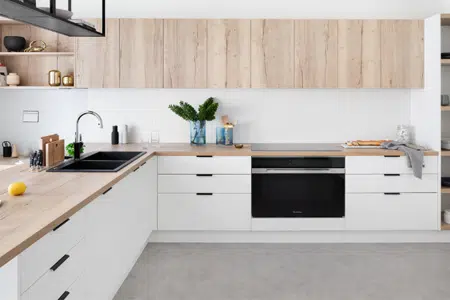
Imagine a completely smooth, flat sheet. That’s a flat-panel cabinet door (sometimes called “slab” doors). There’s no frame, no raised panel, no grooves at all. Just one flat surface from edge to edge. They often have hidden handles or just a groove you put your fingers into to open them, making them look even smoother.
Pros of Flat-Panel Cabinets
1. Easier on the Wallet
Usually, flat-panel cabinets cost less than Shaker cabinets. They use less material and are simpler to manufacture, especially if they’re made from those materials, such as laminate or thermofoil over engineered wood (MDF or particleboard).
2. Super Modern Vibe
If you love that clean, minimalist, contemporary look, flat-panel is it. You won’t see frames or trim; it’s just a single surface that wraps around the edges. This kind of cabinet is great for open-concept lofts or contemporary homes.
3. Works in Many Styles
While super modern is their feature, simple flat panels in a warm wood stain can also work in more casual or Scandinavian-style kitchens. It’s about the finish you pick.
4. Wipe and Go
Just wipe a flat surface, right? Yup—no grooves or edges where dirt hides. A wet towel and mild cleanser are all you need. Great for busy families or messy cooks.
5. Makes Space Feel Bigger
The completely flat front and often handleless design will make them visually very light. They don’t stick out much, which can make a small kitchen feel a bit more open and less cluttered.
Cons of Flat-Panel Cabinets
1. Smudge Magnets
Flat panel cabinet is easy to collect your fingerprints, grease smudges, or even water spots, especially if you choose a glossy finish! Consider using matt finishes if you hate cleaning frequently.
2. Can Feel Cold or Plain
To some people, the extreme simplicity can feel a bit sterile or impersonal, lacking warmth. It depends on your taste.
3. Less Traditional Appeal
If you’re going for a farmhouse, classic, or very warm traditional kitchen, flat-panel cabinets usually won’t fit that vibe. They scream modern.
Shaker vs. Flat-Panel: The Big Differences Side-by-Side
How Do They Look?
| Feature | Shaker Cabinets | Flat-Panel Cabinets |
| Door Profile | Five-piece frame + panel | Single, smooth slab |
| Visual Vibe | Warm, homey, classic | Sleek, modern, minimalist |
| Detail Level | Subtle grooves and frames | No grooves, just flat surfaces |
1. Which Lasts Longer?
- Shaker cabinets often use solid wood or plywood frames, and the frame structure adds strength, so they resist warping and handle knocks.
- Flat-panel doors (especially MDF or laminate) can warp in humidity or peel at the edges over time.
2. Feeling of Space
- Shaker: The slight depth of the frame means they project out a tiny bit more. In a very small kitchen, this might make it feel a fraction more crowded visually.
- Flat-Panel: The flat profile and frequent use of hidden handles (or no handles) make them visually recede. Excellent for making small kitchens looks open and bigger.
3. Which Costs Less?
- Shaker: Typically costs more. The construction is more complex, requiring more parts and labor, especially for solid wood.
- Flat-Panel: Usually the more budget-friendly option, especially in laminate or thermofoil finishes. Simpler construction = lower cost.
3. Difference in Hardware
- Shaker: Usually knobs or bar pulls mount on the frame, so you see them front-and-center.
- Flat-Panel: You can do hidden channels, edge pulls, or even push-to-open hardware can be invisible, keeping surfaces smooth.
4. Which is Easier to Clean?
- Shaker: Clean flat panel areas easily, but the frame edges and corners trap dust, so you gotta wipe carefully.
- Flat-Panel: Just wipe the flat surface—no edges to trap dust or grease.
5. Which Boosts Home Worth?
- Shaker style is classic and attracts many buyers, especially in suburban or traditional neighborhoods.
- Flat-panel might attract buyers in modern or upscale condos; in traditional markets, flat-panel can feel too trendy or cold.
6. Which One is Harder to Install?
- Shaker: The frame provides a bit more tolerance for slight alignment variations – it’s less obvious if a door is very slightly off.
- Flat-Panel: Because the entire surface is flat and often handleless, perfect alignment is absolutely critical. Any door that’s even a millimeter crooked will be glaringly obvious against its neighbor. Installation needs more precision.
How to Make a Selection? Think About These Things
What’s Your Kitchen’s Style?
First, think about whether your home is modern, traditional, farmhouse, or eclectic? Shaker blends into more styles, while flat-panel really leans modern.
How Much Cleaning Do You Mind?
Hate dusting grooves? Flat-panel wins. Don’t mind wiping edges? Shaker’s fine. Hate smudges? Maybe avoid glossy flat-panel.
What Can You Spend?
Flat-panel usually gives more savings upfront (shaker cabinets vs flat panel” cost difference is real). But factor in quality too – cheap cabinets of either type won’t last.
What Finish/Color Do You Want?
Both can be painted or laminated in many colors. Shaker looks great with visible wood grain stains. Flat-panel excels with high-gloss or super-matte finishes.
Resale Value or Personal Taste?
In many regions, Shaker kitchens have broad appeal and might boost resale value more. But if you know your market likes modern, flat-panel can also add value—just research local trends.
Popular Design Pairings
- Shaker Cabinets
Looks fantastic with classic touches like a subway tile backsplash, maybe some open wood shelves, and traditional hardware (like bin pulls or cup knobs). For a modern style, use Shaker in a bold color (navy, charcoal, sage) with sleek bar pulls, quartz countertops, and maybe geometric tiles.
- Flat-Panel Style
Pair it with a handleless design, a waterfall edge quartz or stone countertop, integrated appliances, and maybe a bold, simple backsplash or even just a slab of the same material as the counter. Matte finishes work great here.
Conclusion
Choose shaker or flat-panel cabinets, it depends on your tastes, finally. By learning about this blog, you’ll be able to figure out the most suitable cabinet style for your kitchen.
If you want to get any ideas for your kitchen or a quotation to compare, contact AJ Flying.
FAQs: Shaker vs Flat-Panel Cabinets
1. Can I mix flat-panel and shaker cabinets in one kitchen?
Yes, you can customize the lower cabinets in shaker for a warmer base, then the upper cabinets as flat-panel for a modern top. Or you can do a kitchen island in Shaker and perimeter cabinets in flat-panel.
2. Shaker Cabinet only for traditional kitchens?
Nope, not at all! Shaker kitchen cabinets work well with any style, it’s all about the color and hardware you choose. For example, paint them a crisp white or charcoal gray, use simple modern bar pulls, pair a shaker cabinet with quartz counters and stainless steel appliances – bam, you’ve got a modern kitchen.
Related Resouces
1. Ideas of Shaker Cabinets – Pintrerest
2. IDeas of Flat-Panel Cabinets– Pinterest
 English
  German
  French
  Spanish
  Portuguese
  Turkish
  Dutch
Dutch