
Introduction
Soft-close hinges and self-close hinges are two common choices we make when upgrading and designing cabinets and furniture. There are many differences between these two hinges in terms of function and experience. In the following article, we’ll cover the differences between soft close hinges vs self close Hinges to help you make better choices when optimizing and upgrading your cabinets, furniture, and other projects.
What Are Soft-closing Hinges?
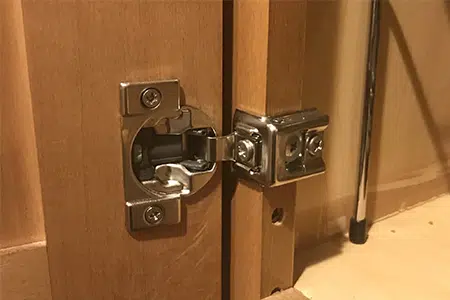
Soft-closing hinges utilize hydraulic systems built into their designs, or they utilize a spring-loaded system; in either situation, these dampening systems slow down the closing action of the door before reaching the closed position, thus avoiding violent slamming, ensuring the cabinet door closes gently, and minimizes noise for the lying and easing back operation, effectively reducing noise on operation.
Advantages of Using Soft-Close Hinges
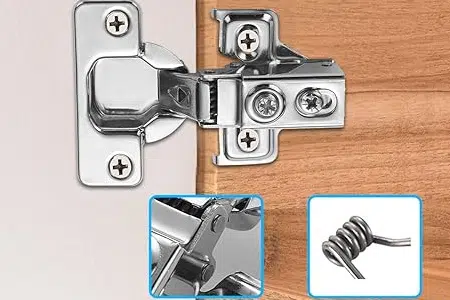
Noise reduction: Soft-close hinges allow cabinet doors to close quietly, reducing the slamming sound when the cabinet doors close.
Durability: Using soft-close hinges helps protect the cabinet structure and hinges from wear and tear caused by frequent impacts.
Safety: Reduces the risk of finger pinching, especially for households with children and pets.
What are Self-Close Hinges
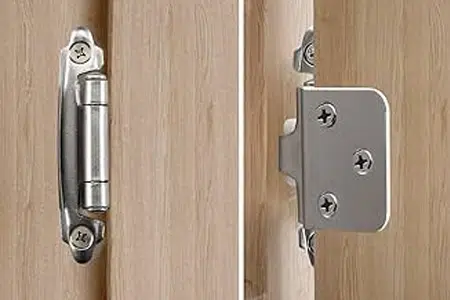
Automatic closing hinges must not be confused with soft opening hinges. Inevitably, they lack a dampening system and invariably resort to using a spring design to close a cabinet door with some force, while at the same time ensuring that the door gets locked adequately with a small cacophonic snap.
Advantages of Using Self-Close Hinges
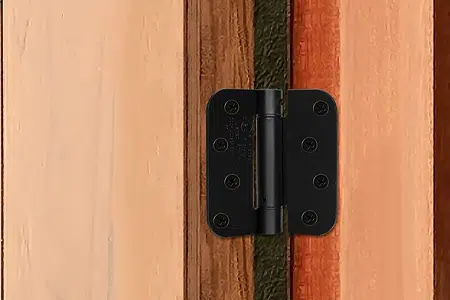
Convenient: Less effort is required when closing, the door closes automatically without any extra effort.
Secure Closure: More force when closing the cabinet door ensures that the door is tightly closed, which is ideal for keeping your items safe.
Cost-effective: Self-close hinges have no damping mechanism, are less expensive to manufacture, and are generally cheaper than soft-close hinges.
Differences Between Soft-Close Hinges and Self-Close Hinges
- Mechanism: The different closing mechanisms for soft closing hinges and self-closing hinges: the soft closing hinges have a built-in hydraulic shock absorber or a buffer device closing the cabinet door. In closing, the door moves slowly towards closure, effectively inhibiting the noise associated with closing a cabinet. Self-closing hinges are operated by either springs or some internal design mechanisms, which themselves close the door automatically after being pushed to a specific angle and then clinking to a locked position.
- Function: Soft-Close Hinge allows the hinge and stops to control and regulate the speed of closure, thereby ensuring that the door would close so as to abate the initial impact force with the frame, preventing an ugly pinched-finger accident. It is most ideal for homes with kids or the elderly and can prolong the life of the furniture.
Self-close hinges are one of the most quickly and firmly fastened types of door hinges. The risk of hurting oneself with a self-latching hinge increases when operated by children, as their fingers can accidentally be pinched shut. There is a risk of increasing the initial impact force on a cabinet door or frame from misuse, and there is a potential for long-term damage to the door panel surface or the frame structure itself.
- Cost: The extra damping design of the soft-close hinge invariably leads to a much higher price, appropriate for users that concentrate on long-term experience. More economical, the automatic-close hinge usually isn’t all that grand in the manufacture. This financially saves on production and hence favors users on a budget, especially since it is an absolute function.
- Installation: The built-in hydraulic or damping mechanism in soft-close hinges presents a challenge because they require more delicate installation than standard hinges. Accurate alignment will be required during installation to ensure the hydraulic function works smoothly. To solve these challenges and ensure a good installation, you can use several supplementary devices or ask a hand of an experienced installer to deal with the craftsmanship of the soft closing mechanism.
Because there is typically no damping mechanism, self-closing hinges are simple to install. Installation mainly focuses on aligning the hinge and making sure it closes properly. They thus require little fine-tuning and can be put in very quickly and are quite suitable for DIY projects.
- User Experience: Soft closing hinges are suitable for users who have high requirements for quality of life. They are often used in luxury furniture or cabinet systems. They have a higher sense of grade and provide a more advanced and comfortable use experience. Automatic closing hinges are highly practical and close the door quickly and effectively. They are suitable for places such as storage rooms and offices where appearance and experience are not high.
Factors to Consider When Choosing Between Soft-close Hinges and Self-close Hinges
Budget considerations
The more expensive soft-close hinges offer a better long-term experience, but self-closing hinges are cheaper to make, easier on the pocket, and better for economical projects or large installations such as commercial spaces or simple decorations. They make the best selection for those on a limited budget but still require functionality.
Use frequency
The cushioning functionality of soft-close hinges can help mitigate impact loss from repeated use, and thus provide for a durable product. Such hinges are tailor-made for a high-frequency usage environment, like those of the kitchen cabinet and the bathroom cabinet door. The self-closing hinges do not have the cushioning functionality and are easily worn. They would be suitable in scenarios where use is low to medium frequency-such as storage rooms or cabinet doors infrequently accessed.
Requirements for use
Soft-closing hinges close doors at a low speed, reducing the potential for impact and extending the cabinet’s life. This basic self-closing mechanism provides self-closing functionality and is most appropriate for areas that strive for fast closing.
Cabinet materials and designs
Soft-close hinges may cause additional mechanical burden on thin wood or lightweight materials. They are suitable for heavier cabinet doors (such as solid wood doors or composite materials). Their cushioning function can effectively cope with the weight of larger door panels. More suitable for simple, modern kitchens or high-end space designs. Lightweight materials or economical materials such as medium-density fiberboard (MDF) are more suitable for self-closing hinges and are more suitable for traditional or country-style cabinets, which emphasize performance rather than luxury.
Conclusion
Soft-closing hinges are useful in developing lower noise levels, as well as in providing additional practical benefits, thereby avoiding personal injury. Self-closing hinges are much easier to operate and affordable, but they do not ensure the same level of silence and safety as soft-close ones, thus recommending themselves to persons on a low budget but seeking for functionality. Get familiar with two different types of hinges, compare the advantages and disadvantages between soft-close hinges and self-closing hinges, and ultimately pick which option works best for you.If you are looking for relevant custom services for hinges, you can contact AJ Flying.
Related Resource
How do Soft Close Hinges Work? – sametglobal.com
Enhance the Functionality of Your Cabinets with Self-Closing Hinges -lronmongery World
 English
  German
  French
  Spanish
  Portuguese
  Turkish
  Dutch
Dutch