
Introduction
Kitchen islands have changed from simple cutting boards with legs to holders of pots, houses of microwave ovens, breakfast seating for families, and storage for everything from spices to serving platters.
What cabinets do you use for an island, if you’re going to use basic cabinets to create an island?
This guide explains how to choose basic cabinets to create an island, including standard cabinets, special storage possibilities, and the depth measurements that make for an effective island.
The Core Cabinetry Options: Function First
Standard Base Cabinets (The Foundation)
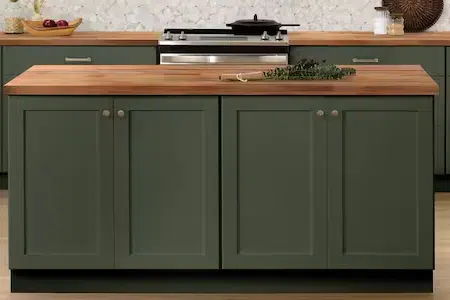
The backbone of most islands is the standard 24-inch deep base cabinet. These are the same kitchen base cabinets you see along your walls, just positioned in the middle of your room.
These cabinets work best on the working side of your island – the side facing your main kitchen. They hold pots, pans, baking sheets, and mixing bowls. The 24-inch depth gives you real storage space without wasting room.
Here’s what matters: if you want seating on the opposite side, you need at least 15 inches of countertop overhang past the cabinet edge. This gives knees enough room. A person sitting at your island shouldn’t bang their legs on cabinet doors.
Drawer Bases (The Efficiency King)
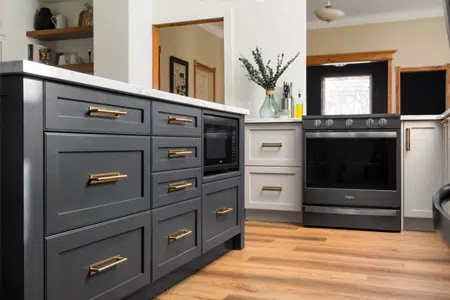
Use drawer base cabinets instead of door cabinets for your island cabinets. You can see everything without getting on your knees to look.
Deep drawers hold bulky items:
- Stand mixers and food processors
- Large serving bowls
- Small appliances that are used weekly
- Baking pans and casserole dishes
Shallow drawers are useful for organizing smaller items:
- Silverware and cooking utensils
- Plastic wrap, foil, and storage bags
- Towels and napkins
- Measuring cups and spoons
Back-to-Back Layout
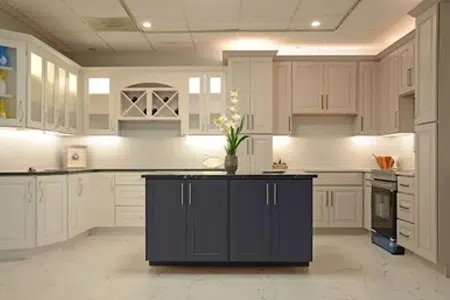
The most storage possible is to have two rows of cabinets deep (24-inch) back-to-back. This creates a storage island 48 inches deep with access on both sides.
The benefits:
- Double cabinet storage
- Full depth of cabinets on both sides
- Works great for L-shaped kitchens which have space to spare
The drawbacks:
- Needs a large kitchen (15 feet minimum across)
- Creates a bulky island that can get in the way of traffic
- Costs more since you pay for twice as many cabinets
This layout is useful for those who do a lot of cooking and need serious storage. For small kitchens you’re better off mixing cabinet depths.
Specialized and Shallow Cabinetry Solutions
12-inch or 15-inch Deep Cabinets (The Hidden Side)
Here’s a trick many people miss: use shallow kitchen cabinets on the seating side of your island. These units are 12 or 15 inches deep instead of the standard 24 inches.
Why does this work? You get storage without stealing legroom. The shallow cabinets hold items you don’t need every day:
- Extra serving platters and bowls
- Cookbooks and recipe binders
- Wine bottles and bar accessories
- Table linens and placemats
The seating side stays comfortable because the cabinets don’t jut out too far. You still get that 15-inch overhang for knees, but now there’s storage behind it instead of wasted space.
Open Shelving for Display
Solid cabinets all around an island can look like a brick. Open shelving breaks this up.
Add open shelves on one end or the seating side. Use them for:
- Wine bottles displayed horizontally
- Decorative bowls or pottery
- Cookbooks you actually use
- Drinking glasses for easy access
The open sections create visual interest. They also give you quick access to items you grab multiple times per day. Just remember – open shelves show dust and clutter. Only use them if you plan to keep things tidy.
Appliance Integration
Modern islands do more than store pots and pans. They can hold working appliances.
Under-counter refrigerator drawers fit perfectly in island cabinets. Put them on the seating side so people can grab drinks without walking into your cooking zone. These drawers work great for:
- Cold drinks and snacks
- Butter and cheese for baking
- Fresh vegetables for salads
Microwave drawers hide the appliance while keeping it reachable. Instead of a microwave taking up counter space, it pulls out from below. The drawer sits at waist height, which actually feels more natural than reaching up to a wall-mounted unit.
The key is planning the cabinet layout before you build. Appliance cabinets need specific dimensions and electrical work.
Design and Aesthetic Elements
Matching vs. Contrasting
You have two main choices for how to style your island cabinet:
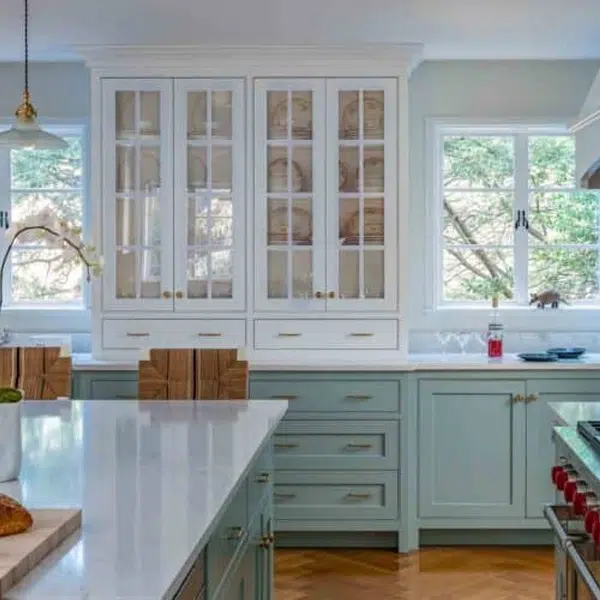
Matching cabinets are the same materials and color as your wall cabinets. This creates a feel of unity between them. Your eye flows around the room uninterrupted. Matching works especially well in smaller kitchens where all things should be connected.
Contrasting cabinets are those which are a different color or wood type.
Here are some popular choices:
- Dark blue island with white perimeter cabinets
- Natural wood island with painted wall cabinets
- Black island with gray walled kitchen
Two tone kitchen cabinets have gained in popularity. The island is the centerpiece of the room. A different color draws the eye and makes the island appear more like furniture and not just more cabinets.
Both are ok. Matching feels classic and calm. Contrasting feels whimsical and carries more visual weight.
Incorporating Decorative Elements
Islands sit in the center of your dining room where they are visible for all sides. Unfinished edges of cabinets look cheap and unplanned.
End panels cover these exposed edges with matching finished material. They match the cabinet doors, and cover up the raw edges of the plywood.
Decorative feet or legs make islands look more like pieces of furniture instead of just boxes. Instead of cabinets being placed flat on the floor, they sit on turned legs or bracket feet. This one small detail makes the island feel different: less like construction. More like a piece you have chosen.
Bookcase ends provide function and style. Adding a narrow open cabinet section (6-8 inches wide) on one end helps. Use it to display cookbooks or decorative items or a place to tuck cutting boards. The vertical break helps to prevent the island from appearing too heavy.
Countertop Overhang
Your cabinet choices control where your countertop sits and how far it can extend.
Standard rule: 15 inches of overhang gives comfortable seating. If you use standard 24-inch cabinets on the working side, your countertop extends 15 inches past them toward the seating side. This puts the counter edge at roughly 39 inches from the cabinet backs.
If you add 12-inch shallow cabinets on the seating side, they fit perfectly under this overhang. The countertop rests on both cabinet rows with space between for legs.
Support matters too. Countertop materials like granite or quartz can only span so far without support. Large overhangs need corbels or support legs. Check with your countertop installer about weight limits – this affects which cabinet layout works best.
Conclusion
The best islands have mixed cabinet depths and types. Place standard 24 inch base cabinets on your working side for the most serious storage. Add shallow 12 or 15 inch cabinets on the seating side to house extra items without detracting from leg room. Fill the island with drawer bases instead of doors- you will use the space better.
Select matching or contrasting colors based on whether you wish the island to be inconspicuous or the center of attention. Finish all the visible sides with end panels and consider decorative feet for the furniture look.
To build the right island, one must think about things like storage, seating, traffic flow and style at the same time. Call AJ Flying to discuss your specific kitchen layout and get expert help on designing an island that will work perfectly in your cooking area.
 English
  German
  French
  Spanish
  Portuguese
  Turkish
  Dutch
Dutch