
Introduction
Are you wondering what is a butler pantry and why it’s becoming a must-have feature in modern homes?
A butler’s pantry gives you extra room to store things and prepare food. It keeps your main kitchen clean and organized. Many homeowners add them to create a better kitchen workflow and make entertaining easier.
In this post, you’ll learn it from the definition, history, types of butter pantries to how to design your butler‘s pantry
What is a Butler’s Pantry?
A butler’s pantry is a small room or hallway that connects your kitchen to your dining area. Think of it as a helper space for your kitchen. It has cabinets, counter space, and storage for dishes, small appliances, and food.
The main job of a butler’s pantry is to give you more space to organize your kitchen items. You can prep food here, store your good china, or set up a coffee station. This keeps your main kitchen counters clear and makes cooking easier.
The History of Butler’s Pantries
The origin of a butler’s pantry started in large elaborate homes over 100 years ago. In those homes, when you had money and a staff of servants that included a butler managing the household, there was the butler’s pantry room or space where they kept all the good silver, china, and glassware.
The butler’s pantry was the place butlers would prepare tea service, polish silver, and prepare for dinner parties. Generally, the butler’s pantry is located between the kitchen, where the servants were working, and the dining room or service area the family’s meal.
Types of Butler’s Pantries by Shape and Layout
Hallway Style Butler’s Pantry
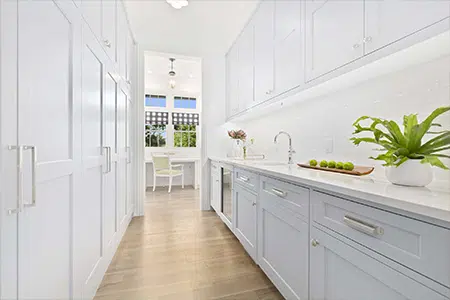
A hallway butler’s pantry runs along one long wall between your kitchen and dining room. This works well in homes where these rooms sit next to each other with a narrow space between.
The hallway style gives you cabinets and counter space on one side. You walk through it to get from kitchen to dining room. This design saves space but still gives you plenty of storage.
When planning a hallway pantry, make sure you leave at least 36 inches of walking space. This lets people move through easily, even when cabinet doors are open.
U-Shaped Butler’s Pantry
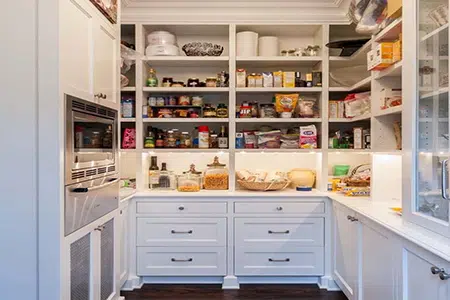
The U-shaped butler’s pantry occupies three walls in a small space. This maximizes your storage and counter space in a small footprint.
With the U-shape you can orient your kitchen items into distinct zones. One wall could hold dishes, another wall is dedicated to small appliances, and the last wall becomes your prep zone.
It is best to use this option when you have a separate room for your butler’s pantry. Corners in a U-shape require careful planning so that they are easily accessible.
One-Wall Butler’s Pantry
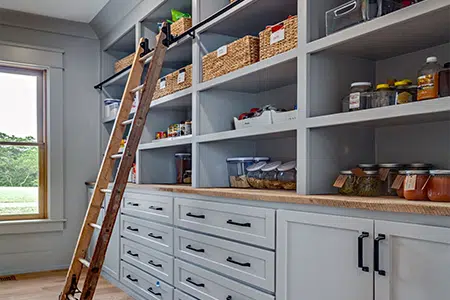
A one-wall butler’s pantry puts all storage and counter space along a single wall. This is the simplest and most budget-friendly option.
Even with less storage than other layouts, a one-wall pantry can still solve many kitchen organization problems. You can hide small appliances, store serving dishes, or create a beverage station.
This style works well when you don’t have much extra space but still want the benefits of a butler’s pantry.
Butler’s Pantry Types By Door Options
1. Pocket Doors
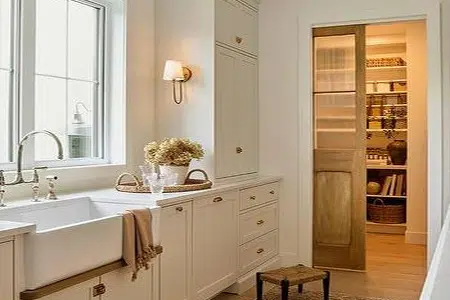
Pocket doors slide into the wall when you open them. They save space because the door doesn’t swing out into your kitchen or dining room.
Pocket doors work great for butler’s pantries because they let you move freely between spaces. When you’re carrying dishes or serving food, you don’t have to worry about doors getting in your way.
The main downside is that pocket doors cost more to install. You need to plan for them during construction or renovation because they require special wall framing.
2. Swinging Doors
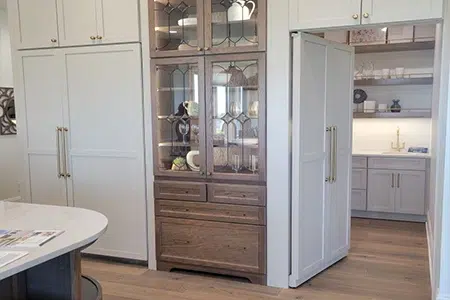
Traditional swinging doors are the most common choice for butler’s pantries. They cost less than pocket doors and work with most home layouts.
Swinging doors can open into the kitchen, dining room, or pantry space. Choose the direction based on your traffic flow and how you plan to use the space.
The drawback is that swinging doors take up space when open. This can make narrow areas feel cramped or block walkways.
3. Sliding Panels
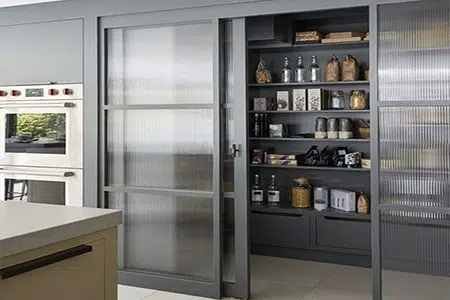
Sliding panels mount on tracks and slide along the wall. They give you a modern look and don’t take up swing space like traditional doors.
Sliding panels can be solid wood, glass, or even barn door style. They let you match your butler’s pantry to your home’s design style.
These doors work well when you want to show off beautiful dishes or glassware inside your pantry. Glass panels let light flow between spaces too.
Modern Uses for Butler’s Pantries
Coffee and Beverage Station
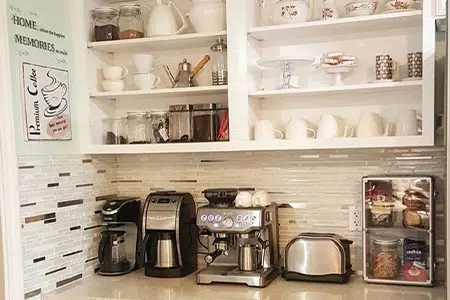
Many homeowners turn their butler’s pantry into a coffee bar. You can store your coffee maker, grinder, mugs, and supplies all in one place.
Set up your coffee station with electrical outlets for appliances. Add storage for coffee beans, filters, and sweeteners. Install a small sink if you have room; you can clean up mugs easily.
Wine Storage and Bar Area
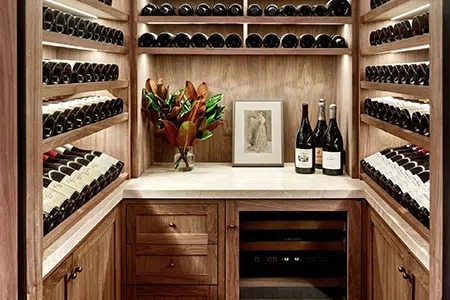
Butler’s pantries are ideal locations for wine storage. You can install wine racks, store glasses, and even store bar tools.
In terms of temperature, Butler’s pantries are typically cooler than the main kitchen. Appliances in kitchens create heat and can raise the temperature in wine-storage areas.
If you have the space and the budget, you can install a wine fridge, too. If you host often and it is within your budget, you may even consider separate storage for types of glass and other supplies for cocktails.
Fine China and Dishware Display
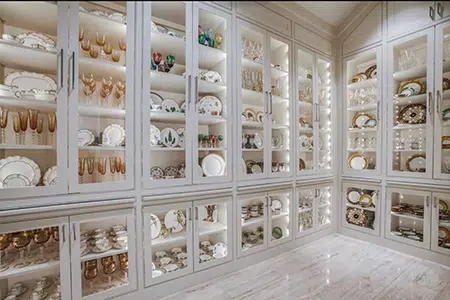
Your good dishes deserve a special place. Butler’s pantries let you store and display china, crystal, and serving pieces safely.
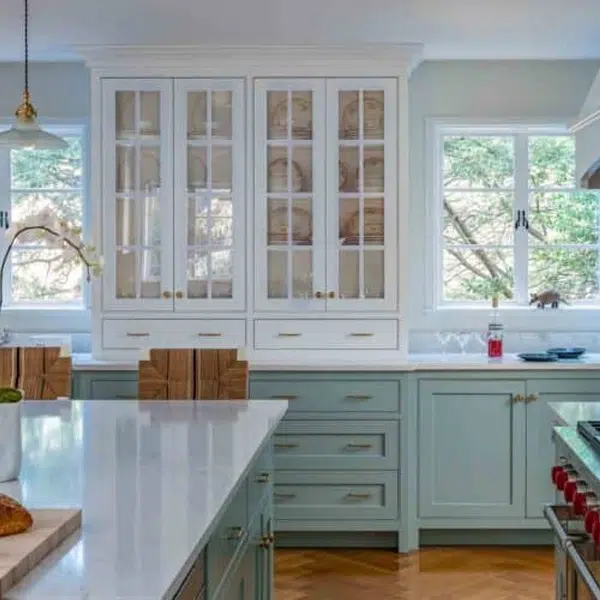
Use glass-front cabinets to show off beautiful dishes while protecting them from dust. Add interior lighting to make displays look even better.
Keep everyday dishes in your main kitchen. Save the butler’s pantry for special occasion pieces and serving items you don’t use daily.
Secondary Cooking Zone
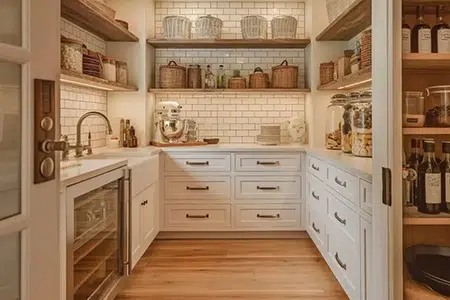
Some butler’s pantries include cooking appliances like wall ovens or warming drawers. This gives you extra cooking space for big meals.
A second oven helps when you’re cooking holiday dinners or entertaining large groups. You can bake desserts while your main oven handles the roast.
Make sure you plan for proper ventilation if you add cooking appliances. You’ll also need adequate electrical service for high-power appliances.
Small Appliance Storage
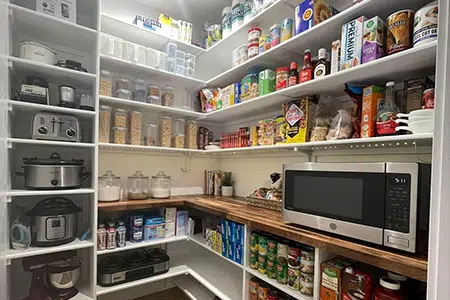
Hide countertop appliances in your butler’s pantry to keep your main kitchen looking clean. Store blenders, food processors, mixers, and other tools here.
Plan electrical outlets so you can use appliances without moving them. This saves time and keeps your workflow smooth.
Group similar appliances together. Put baking tools near your mixer and food prep tools near cutting boards and knives.
Pros and Cons of Butler’s Pantries
Benefits of Adding a Butler’s Pantry
- Extra Storage Space – Butler’s pantries give you more cabinet and counter space for kitchen items. This helps solve storage problems in smaller kitchens.
- Better Organization – You can organize your kitchen into zones with a butler’s pantry. Keep serving pieces separate from cooking tools for easier meal prep.
- Cleaner Main Kitchen – Hide small appliances and clutter in the pantry. This makes your main kitchen look neat and organized all the time.
- Better Entertaining – Set up drinks, arrange serving dishes, or warm appetizers in your butler’s pantry. Guests don’t see the mess while you prepare.
- Shows Off Nice Dishes – Display your good china and glassware properly. Glass-front cabinets protect pieces while letting you show them off.
- Improves Kitchen Workflow – A butler’s pantry creates efficient zones where you organize different kitchen activities.
Drawbacks to Consider
- Higher Cost – A butler’s pantry could mean more cabinets, countertops & electrical work to be done.
- Takes Up Space – You need additional space between your kitchen and dining space. Not every home has enough space for a butler’s pantry.
- Limited Plumbing – Most butler’s pantry’s do not have sinks or plumbing. You will have to go to your primary kitchen for water.
- Maintenance – More cabinets means more surfaces to clean and organize. You will have spend more time keeping your pantry organized.
- May Feel Cramped – Small butler’s pantry’s may feel cramped, particularly with cabinet doors open. Plan for enough space to walk.
Planning Your Butler’s Pantry Design
Space Requirements
To function effectively, a butler’s pantry should be no less than 6 feet long and 3 feet wide. This provides sufficient space for either cabinets on one side (i.e. a single run) and a walking zone or, if you desire, cabinets on both sides (i.e. double run) and a walking zone. If you want cabinets on both sides, plan for a width of 5-6 feet, in order to allow the cabinet doors to open without colliding with one other.
When planning out your butler’s pantry, consider the movement between your kitchen and dining spaces. You want the pantry to facilitate movement, not create congestion in traffic flow.
Cabinet Selection and Layout
Choose cabinets that match your main kitchen or complement your home’s style. Shaker kitchen cabinets work well because they’re timeless and versatile. Plan upper and lower cabinets for maximum storage. Include some open shelving to display dishes or store frequently used items.
Consider framed vs frameless cabinets based on your style preference and budget. Frameless cabinets give you slightly more interior space. Work with a custom cabinet manufacturer like AJ Flying to get cabinets that fit your space perfectly. Custom cabinets use every inch efficiently.
Butler Pantry Must-Have Features
Storage Solutions
Plan enough counter space for food prep and serving. At least 2 feet of continuous counter space works for most tasks. Include both upper and lower cabinets for maximum storage. Use drawers in lower cabinets for easy access to small items.
Add decorative containers, baskets, and trays to keep things organized. These make your pantry look neat and help you find items quickly.
Lighting Design
Good lighting is essential in a butler’s pantry. You need bright light for food prep and softer light to show off displays.
Install under-cabinet lighting to eliminate shadows on work surfaces. This makes food prep safer and easier. Add accent lighting inside glass-front cabinets to highlight dishes and glassware. LED strip lights work well and don’t create heat.
Include general overhead lighting for the whole space. A pendant light or recessed lights provide good overall illumination.
Hardware and Finishes
Choose cabinet hardware that matches your kitchen or complements your home’s style. Pulls work better than knobs for frequently used cabinets.
Select countertops that can handle food prep and are easy to clean. Quartz and granite work well in butler’s pantries.
Pick finishes that hide fingerprints and water spots. Darker colors and textured surfaces work better than high-gloss whites.
Building Your Butler’s Pantry
Working with Professionals
Engage a contractor for structural elements, electrical work, and plumbing work. Most of these tasks require permits from your municipality and the expertise of a licensed professional.
The next step is to consult a kitchen designer to help you plan the layout and select the materials. A professional kitchen designer can help you avoid many common mistakes and maximize your space.
Finally, invest your money in a custom cabinet manufacturer (e.g., AJ Flying). Custom cabinets will give you cabinets that fit nicely. Custom cabinets generally make better use of unique measurements and awkward nooks and crannies.
DIY Considerations
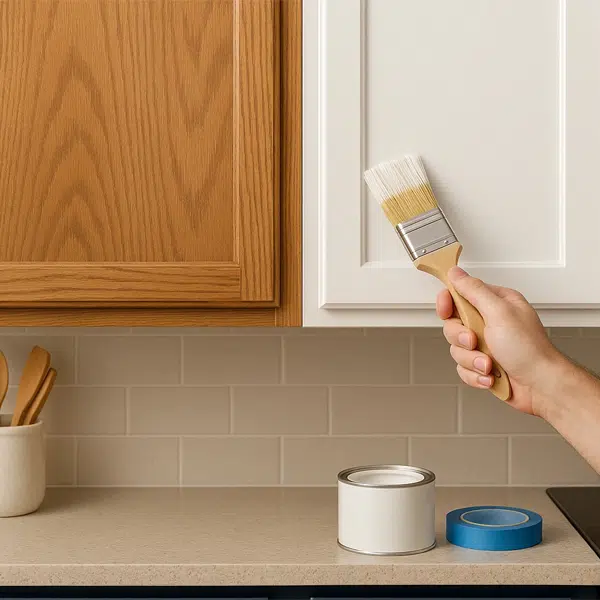
Homeowners can handle some tasks like painting and installing simple hardware. Leave electrical, plumbing, and structural work to professionals.
Plan your project timeline carefully. Cabinet installation usually takes 1-2 weeks, plus time for countertops and finishing work.
Budget for unexpected issues like electrical upgrades or structural modifications. Add 10-20% to your budget for surprises.
Conclusion
A butler’s pantry can transform how you organize your kitchen and entertain guests. It gives you extra storage, prep space, and a place to hide clutter from your main kitchen.
The key is planning carefully for your space, budget, and needs. Consider the different layout options and choose features that match how you cook and entertain.
Whether you want a simple one-wall pantry or a full U-shaped room, work with professionals to get the best results. Custom cabinets from manufacturers like AJ Flying ensure your pantry fits perfectly and functions well.
Frequently Asked Questions
1. Are Butler’s Pantries Still Popular?
Yes, butler’s pantries are becoming more popular as homeowners look for better ways to organize their kitchens. Open floor plans and smaller kitchens make extra storage and prep space very valuable.
2. What are Other Names for a Butler’s Pantry?
Butler’s pantries are also called serving pantries, prep kitchens, or sculleries. Some people call them wet bars if they include a sink, or coffee bars if that’s their main purpose.
3. How Do You Tell the Difference Between a Butler’s Pantry and a Regular Pantry?
A regular pantry stores mostly food and dry goods. It usually has shelving and focuses on storage rather than work space.
A butler’s pantry includes counter space, cabinets for dishes and serving pieces, and often electrical outlets for appliances. It’s designed for food prep and entertaining, not just storage.
4. What’s the Ideal Size for a Butler’s Pantry?
The ideal butler’s pantry is 6-8 feet long and 4-5 feet wide. This gives you enough space for cabinets, counter workspace, and comfortable movement.
Smaller spaces can work if planned carefully. Even a 6-foot by 3-foot space can provide valuable extra storage and prep area.
5. Do Butler’s Pantries Add Home Value?
Butler’s pantries can add home value, especially in higher-end homes where buyers expect luxury features. The actual value depends on your local market and how well the pantry integrates with your kitchen layout.
The main benefit is improved functionality rather than direct financial return. A well-designed butler’s pantry makes your kitchen more efficient and enjoyable to use.
 English
  German
  French
  Spanish
  Portuguese
  Turkish
  Dutch
Dutch