
Settling the Score (The Dilemma)
Your kitchen remodel has been in the works for months. The cabinets are made, the flooring has been selected, and then someone says, “cabinets or flooring first”? The Great Renovation Debate?” This innocent enough question stops a lot of jobs cold.
The order you determine affects your budget, how much product is wasted, how long the job takes and whether your floor remains intact for years.
In this case there is no one answer. It depends on the type of flooring and cabinet style you are going with.
The Case for Flooring First (The “Purist” Method)
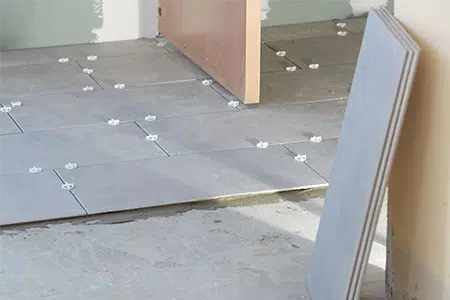
Argument 1: Seamless Aesthetics
Installing floor covering wall-to-wall before the cabinets are set helps create a seamless surface across the entire kitchen. The floor flows underneath everything, meaning no voids, no exposed subfloor, no uneven changes in level. When you look at the space, you see a solid surface level. This is important especially when you have islands in the kitchen or if you expect to change the plan of the kitchen. The floor has already been installed and is available for any arrangement.
Argument 2: Easier Cabinet Installation
A finished floor gives installers a perfectly level reference point. They don’t need to guess where the final floor height will be. Base cabinets sit flat without excessive shimming or adjustments. This speeds up installation and reduces errors. The cabinet toe kick sits cleanly on top of the floor without complicated cutting or fitting.
A finished floor gives the installers a perfectly level point of reference. They do not have to figure out where the floor height is going to be at the end of the installation. The base cabinets lie flat without excessive shimming or adjustments. This expedites installation and reduces errors. The cabinet toe kick rests easily on the finished flooring without any complicated cutting or fitting.
Argument 3: Future Proofing
Floors wear out before cabinets do. Usually, within 10 to 15 years, you will want new flooring, but you can retain the cabinets. If the floor goes underneath, you can pull it out and put new material without disturbing the cabinets. This saves thousands of dollars. If the floor goes only to the edges of the cabinets, you must remove the cabinets completely to put in the floor.
Best for
Ceramic and porcelain tile always go first. This is an infallible rule. Tile needs a hard, flat substrate. It serves as a waterproof barrier. The cabinets sit on the top of the tile for stability. The same goes for natural stone such as slate, marble or granite tiles.
The Case for Cabinets First (The “Economical” Method)
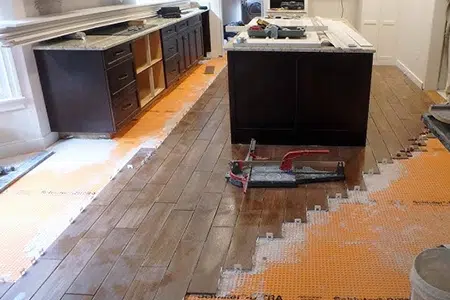
Argument 1: Material Cost Savings
How come you pay for floors that will never be seen? Cabinets and appliances cover a great deal of floor space. When cabinets are put in first, flooring only is bought and laid down where it shows. This cuts the cost of materials from 15 to 25 percent in most kitchens. You save on labor for installing because the square footage is smaller.
Here is where the savings come:
- Hardwood planks hid by cabinets
- Luxury vinyl tile under sink cabinet
- Laminate under refrigerator and dishwasher openings
- Labor time for cutting and fitting around obstacles
Argument 2: Protecting the Finish
The installation of cabinets involves moving heavy boxes, using power tools, and making movements. The workmen drag wall cabinets across the floor. They drop screws. They place ladders against things. If the new hardwood or vinyl floor is laid, the surface is scratched, supposedly dented and scuffed in the process. By putting in the cabinets first there is safety to preserve the floor during the messy work of installation.
Argument 3: Weight Distribution
The big size of frameless cabinetsvcontaining a kitchen full of dishes runs into hundreds of pounds. Some kinds of floor coverings cannot stand the concentrated weight. Softer vinyl and floating floors can suffer an impression under this pressure. By putting the cabinets directly onto the sub-floor the weight is centered in the strongest portion of the structure. The flooring around the cabinets carries a lessened weight and remains stable.
Consensus
The cabinet-first method is the one most professional installers will use on a standard job. This is the standard procedure for site-finished hardwoods, laminate cabinets with laminate floors, and vinyl jobs. It is the best answer for cost, practicality and protection. Unless your floor falls into one of the exceptional categories below, cabinets first is the preferred method.
The Critical Exceptions (When the Rules Change)
Floating Floors (LVT, Laminate, Engineered Wood)
Rule: Do not install cabinets on floating floors.
Reason: Floating floors are not nailed down or glued down. They float on an underlayment. These floors will, through temperature and humidity, expand and contract, and need to have room to do so. However, when you put shaker kitchen cabinets or other heavy cabinets directly on top, you pin the floor down in place. The floor then has no ability to expand or contract and buckles. The seams open. The planks will curl. And the whole system will fail.
Recommendation: Install all cabinets first on the sub-floor, leaving the toe kick area open. Then install the floating floor to the edge of the cabinets, having the proper expansion gap around the perimeter. The floor should slide ever so slightly under the toe kick but never be trapped underneath the cabinet box itself.
This relates to:
- Luxury vinyl tile (LVT)
- Luxury vinyl plank (LVP)
- Laminate planks
- Engineered wood with click-lock systems
Tile/Stone
Rule: Tile always first, wall-to-wall.
Reason: Tile makes a solid, flat, and waterproof basis. Cabinets require stability to prevent shifting. Tile installations involve mortar and grout, which means mess, moisture and heavy materials. Tiling around already-installed cabinetry creates uneven edges, grout lines that don’t match and gaps through which water may seep.
The tile creates a uniform surface. Your kitchen base cabinets sit firmly without risk of settling or shifting. The tile floor will be unbroken and level, even if you happen to change the cabinets later.
Professional Recommendation and Step-by-Step
Pro Method
The majority of present-day kitchen installations utilize the cabinet-first technique, prepping for the floor thickness as planned. Installation professionals take measurements of the finished height of the floor prior to cabinet installation. To allow for the excess of the flooring, installers will sometimes use temporary spacers or shims. This allows for a small amount of space beneath the cabinet toe kick, which the flooring slides into. The finished product is clean and appears intentional.
Steps for “Cabinets First”
1. Subfloor Preparation
Examine and level the subfloor, and fix any cracks or squeaks found. A solid subfloor prevents cabinet and floor problems later. This step takes 1 to 2 days, depending on the damage found.
2. Install Base and Upper Cabinets
Install the wall cabinets first; this way, the base cabinets won’t be in the way. Install the base cabinets now, checking the level frequently. Shim as necessary. Different kitchen layouts like U-shaped or L-shaped designs may require different installation sequences.
3. Install Countertops
Once the cabinets are affixed, template and install the countertops. The cabinets are thereby kept from damage while the work of countertop installation is being done. The countertop height must be correct before the floor is laid.
4. Install Flooring
Next we install the floor covering. Make sure the flooring is cut so that it fits snugly against the toe-kicks and around appliances. The flooring should be inserted slightly underneath the toe-kick overhang but not underneath the cabinet box. Expansion gaps should be left according to the manufacturer’s recommendations.
5. Install Baseboards and Trim
Finally, the trim is installed to cover up any minor openings created by the flooring and cabinets. The baseboard is put in along the walls. Toe kick trim is applied to finish off the bottom of the cabinets. This step gives a finish appearance.
Conclusion
There isn’t just one right answer to the cabinets-or floors-first question. Tile floors always go in first for stability and waterproofing. Floating floors must be built around cabinets in order to allow for expansion. Hardwood and conventional vinyl are usually put in after cabinets in order to save money and to protect the finish. Always check with your flooring manufacturer about warranty requirements. Warranties on some brands are void if installation is not done as they specify.
When you are ready to get started on your kitchen project with quality cabinets made to your specifications, call AJ Flying for expert advice and custom manufacturing solutions.
 English
  German
  French
  Spanish
  Portuguese
  Turkish
  Dutch
Dutch