
Introduction
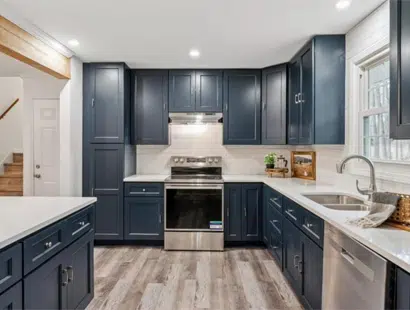
Navy blue has become the go-to choice for homeowners who want something bolder than white but not as stark as black. The color brings a sense of calm sophistication that works in any home.
Are you going to design a navy blue kitchen cabinets without any ideas and don’t know how to do? Follow this guide, and you will learn about the benefits, popular navy blue kitchen cabinets ideas in 2025, to design tips. Let’s move on to check it out.
1. Timeless Appeal That Won’t Date Your Kitchen
Navy blue cabinets will look just as good in ten years as they do today. I’ve installed navy cabinets in homes built in the 1920s and brand new constructions – the color works across all time periods.
This timeless quality protects your investment. When you choose a classic color like navy, you won’t need to replace your cabinets to keep up with trends. You can simply update accessories, lighting, or hardware to refresh the look.
2. Works with Any Design Style
One of navy’s greatest strengths is its versatility. Whether your home leans modern, traditional, farmhouse, or coastal, navy cabinets can fit right in.
For modern kitchens, navy provides depth against clean white surfaces and stainless steel appliances. In traditional spaces, it pairs beautifully with classic materials like marble and brass. Farmhouse kitchens benefit from navy’s connection to vintage Americana, while coastal homes naturally embrace the nautical association.
3. Creates Depth and Visual Interest
Navy blue cabinets add visual weight to your kitchen without making the space feel smaller. The color creates depth and dimension that lighter cabinets simply can’t achieve.
This depth works especially well in open floor plans where the kitchen needs to hold its own against adjacent living spaces. Navy cabinets help define the kitchen area while maintaining flow with the rest of your home.
This classic two-tone kitchen cabinet combination gives you the best of both worlds. Navy base cabinets provide sophistication and hide everyday wear, while white upper cabinets keep the space feeling bright and open.
The visual break between upper and lower cabinets creates horizontal lines that can make your kitchen appear wider. This works especially well in galley kitchens or narrow spaces.
Combining navy blue cabinets with natural wood creates warmth and texture. This approach works particularly well when you want a modern kitchen that doesn’t feel cold.
Oak cabinets pair beautifully with navy – the warm undertones in oak complement navy’s cool base. Walnut creates a more dramatic contrast, while lighter woods like maple or birch keep the overall feel bright.
Professional tip: Use wood on upper cabinets or open shelving rather than lower cabinets. Wood shows wear more easily in high-traffic areas, so reserve it for display and storage areas.
Shaker style cabinets in navy blue represent the perfect marriage of classic design and contemporary color. The simple, clean lines of Shaker doors let the navy color take center stage without competing details.
The raised panel design of Shaker cabinets creates subtle shadows that add depth to the navy color. This works especially well under different lighting conditions – the panels catch light beautifully during the day and create cozy shadows in the evening.
Flat panel cabinets work especially well with navy because the smooth surface shows off the depth and richness of the color. Without decorative details to distract, the navy becomes the star.
This style pairs beautifully with modern hardware – think sleek bar pulls or integrated handles that maintain the clean lines.
Glass-front doors on navy blue cabinets create display opportunities that you don’t get with lighter colors. The dark background makes white dishes, glassware, and colorful items really pop.
Consider using glass fronts on just a few upper cabinets rather than all of them. This creates visual interest while still providing hidden storage for everyday items.
Lighting inside glass-front cabinets is crucial. LED strip lighting illuminates your displays and prevents the navy interior from looking like a dark cave.
Using navy blue only on your kitchen island creates a stunning focal point without overwhelming the space. This approach works well if you love navy but worry about too much dark color.
When designing a navy blue island, consider the proportions carefully. Avoid common kitchen island mistakes by ensuring adequate clearance and appropriate size for your space.
Brass hardware with navy cabinets creates a classic, timeless combination. The warm metal softens the cool blue and adds an elegant touch that works in both traditional and contemporary settings.
Chrome and stainless steel hardware provide a more modern feel. These cooler metals create crisp contrast with navy cabinets and work well with stainless steel appliances.
Expert advice on mixing metals: You can successfully mix metals in your kitchen by choosing one dominant metal (like brass cabinet hardware) and using another as an accent (like stainless steel appliances).
Countertop Pairings: White, Marble, and Natural Stone
Carrara marble brings elegance and natural beauty to navy kitchens. The subtle veining in white marble adds texture and visual interest without competing with the cabinet color.
For a more dramatic look, consider darker countertops like black granite or dark quartz. This creates a sophisticated, moody atmosphere that works especially well in modern designs.
Practical consideration: Light countertops show scratches and stains more easily than darker surfaces, but they help balance dark cabinets and make food preparation easier.
Balancing Dark Cabinets with Light Elements
The key to successful navy kitchens is achieving the right balance between dark and light elements. I recommend following the 60-30-10 rule: 60% light elements, 30% navy cabinets, and 10% accent colors.
The best wall colors with navy cabinets are soft, neutral tones that provide contrast without competing. Warm whites, soft grays, and pale beiges work beautifully.
For bolder choices, consider soft sage green or warm cream colors. These add personality while maintaining the sophisticated feel of navy cabinets.
Paint finish matters in kitchens. Use semi-gloss or satin finishes that can handle kitchen moisture and are easy to clean.
Adding Texture to Prevent Flat Appearance
Navy cabinets can look flat under certain lighting conditions, so adding texture keeps the design interesting. Textured tile backsplashes, wood-paneled range hoods, and natural stone surfaces all add visual depth.
Consider subway tiles with beveled edges, natural stone with varied surfaces, or wood grain patterns. These elements catch light differently throughout the day and create visual movement.
Mixed materials work especially well with navy. Combine smooth cabinet surfaces with rough stone, glossy tiles with matte finishes, or painted wood with natural wood grain.
Light flooring helps balance navy cabinets and keeps the kitchen feeling spacious. Light oak hardwood, pale tile, or luxury vinyl in light tones all work well.
For a more dramatic approach, dark flooring can work if you have plenty of natural light and light countertops. Dark hardwood or tile creates a sophisticated, grounded feeling.
You don’t need navy cabinets throughout your entire kitchen to get the impact. Using navy strategically as an accent can be just as effective.
Consider navy on just the island, a single wall of cabinets, or lower cabinets only. This gives you the sophisticated color without overwhelming smaller spaces.
Open Shelving and Glass Inserts for Visual Relief
Breaking up solid navy surfaces with open shelving or glass-front cabinets prevents the color from feeling heavy. This strategy works especially well on upper cabinets.
Open shelves provide display space for dishes, cookbooks, and decorative items. The items you display add color and personality to the navy background.
Glass inserts in some upper cabinet doors create the same visual break while still providing enclosed storage. This approach works well if you want to display nice dishes while hiding everyday items.
Lighting Strategies for Dark Cabinets
Navy cabinets require more lighting than white cabinets to prevent a dark, gloomy feeling. Plan for multiple layers of lighting including natural light, task lighting, and ambient lighting.
Maximize natural light by keeping window treatments minimal and using light colors on surfaces that reflect light back into the space.
Under-cabinet LED strips are essential with navy cabinets. They provide task lighting for food preparation and prevent dark shadows under upper cabinets. Learn how to hide under-cabinet lighting wires for a clean installation.
Pendant lights over islands and dining areas provide both task and ambient lighting. Choose fixtures with warm light temperatures (2700K-3000K) to complement navy’s cool undertones.
Classic Neutrals (White, Gray, Beige)
White remains the most popular and reliable partner for navy blue cabinets. Pure white creates crisp contrast, while warm whites like ivory or cream soften the overall feel.
Light gray walls provide subtle contrast without the starkness of white. Choose warm gray tones rather than cool grays to prevent the kitchen from feeling cold.
Beige and cream colors add warmth to navy kitchens. These colors work especially well in traditional or transitional designs where you want a softer, more comfortable feeling.
Metallic Accents (Gold, Brass, Chrome)
Warm metals like brass and gold create luxury finishes with navy cabinets. These metals have made a strong comeback and pair beautifully with navy’s sophisticated color.
Hardware quality matters with dark cabinets. Poor-quality finishes show up more against dark backgrounds, so invest in solid brass or high-quality plated finishes.
Chrome and stainless steel provide crisp, modern contrast with navy. These cooler metals work well in contemporary designs and complement stainless steel appliances.
Natural Elements (Wood Tones and Stone)
Natural wood tones bring warmth to navy kitchens. Light oak, maple, and birch create bright contrast, while walnut and cherry provide rich, complementary tones.
Wood can be introduced through flooring, countertops, open shelving, or accent pieces like cutting boards and bar stools.
Natural stone elements like marble backsplashes or granite countertops add texture and organic beauty to navy designs.
Bold Accent Colors (Blush, Mustard, Teal)
Small amounts of bold accent colors can personalize your navy kitchen. Blush pink adds feminine softness, mustard yellow brings warmth and energy, and teal creates a sophisticated monochromatic scheme.
Use accent colors sparingly through textiles, small appliances, or decorative accessories. These colors should enhance the navy, not compete with it.
Seasonal flexibility: Choose removable accent colors through dish towels, artwork, or plants so you can change the mood without major renovations.
Modern navy kitchens emphasize clean lines, minimal ornamentation, and sophisticated materials. Frameless cabinets work especially well in contemporary designs.
Flat panel doors, integrated handles, and sleek hardware create the streamlined look that modern design requires. Navy provides the depth and interest that prevents modern kitchens from feeling sterile.
Pair modern navy cabinets with white quartz countertops, stainless steel appliances, and geometric tile patterns for a sophisticated contemporary look.
Coastal and Nautical Kitchen Designs
Navy blue has natural connections to coastal and nautical themes, but avoid cliché decorative elements like anchors and rope details. Instead, let the navy color provide the nautical reference while keeping other elements sophisticated.
White beadboard, natural wood accents, and marble countertops create elegant coastal style without looking themed. Add natural textures through jute rugs, linen window treatments, and organic materials.
Authentic coastal design focuses on natural materials, comfortable fabrics, and relaxed elegance rather than decorative nautical symbols.
Navy cabinets work beautifully in farmhouse kitchens when paired with traditional elements like farmhouse sinks, butcher block countertops, and vintage-style hardware.
Shaker cabinet doors in navy provide the simple, functional style that farmhouse design celebrates. Add open shelving with natural wood brackets and display everyday dishes and mason jars.
Subway tile backsplashes, vintage lighting fixtures, and natural wood accents complete the farmhouse look while keeping it fresh and updated.
Traditional and Transitional Styles
Navy cabinets fit perfectly in traditional kitchens where they provide sophisticated color while respecting classic proportions and details.
Traditional navy kitchens work well with raised panel doors, decorative moldings, and classic materials like marble and hardwood. Brass hardware and warm lighting complete the timeless look.
Transitional designs blend traditional and contemporary elements. Navy cabinets provide the perfect bridge – classic enough for traditional elements but sophisticated enough for modern touches.
Practical Considerations and Maintenance
1. Do Navy Cabinets Show Dust, Fingerprints, or Scratches?
Navy cabinets actually hide dust better than white cabinets, though they show water spots and fingerprints more readily than very dark colors like black.
The key is choosing the right finish. Semi-gloss and satin finishes resist moisture and clean easily, while matte finishes hide fingerprints but can be harder to clean.
Real-world experience: After five years with navy cabinets in my own kitchen, I can confirm they require about the same maintenance as any painted cabinet. Weekly cleaning with a damp cloth keeps them looking fresh.
2. Best Cabinet Materials for Navy Blue Finish
Quality wood species take paint finishes better than others. Maple, birch, and poplar provide smooth surfaces that show off navy color beautifully.
MDF (Medium Density Fiberboard) also takes paint exceptionally well and costs less than solid wood. MDF provides perfectly smooth surfaces for painted finishes.
Avoid woods with heavy grain patterns like oak or ash for painted finishes, as the grain texture can show through paint and create an uneven appearance.
Professional Cleaning and Care Tips
Clean navy cabinets weekly with a microfiber cloth dampened with warm water and a drop of dish soap. Avoid harsh chemicals that can damage painted finishes.
For stubborn spots, use a gentle all-purpose cleaner and immediately dry the area to prevent water spots. Never use abrasive cleaners or scrubbing pads on painted surfaces.
Annual deep cleaning: Remove all items from cabinets and clean both inside and outside surfaces. Check cabinet door hinges and hardware for needed adjustments.
Conclusion
Navy blue is a bold and beautiful choice for kitchen cabinets. It can make your kitchen look stylish and unique. If you’re handy and have time, you can paint your cabinets yourself. But if you want a perfect finish, it’s best to hire a pro like AJ Flying.
Frequently Asked Questions
1. Is navy blue a good color for kitchen cabinets?
Yes, navy blue is an excellent choice for kitchen cabinets. Navy provides depth and visual interest while remaining neutral enough to pair with various colors and materials.
2. What hardware works best with navy blue cabinets?
Brass and gold hardware create the most popular combination with navy cabinets, providing warm contrast that feels luxurious. Chrome and stainless steel offer modern, crisp contrast.
3. What backsplash looks best with navy blue cabinets?
White subway tile remains the most popular choice, providing classic contrast that brightens the space. Natural stone, marble, and light-colored ceramic tiles also work well.
4. What countertops pair well with navy kitchen cabinets?
White countertops in quartz, marble, or solid surface materials create the most striking contrast with navy cabinets. Light gray and cream-colored countertops also work beautifully. For dramatic modern looks, black or dark gray countertops can work if balanced with plenty of light elements elsewhere.
5. Do navy cabinets make a kitchen look smaller?
Navy cabinets don’t necessarily make kitchens look smaller if properly balanced with light elements. Use white or light countertops, adequate lighting, and light wall colors to maintain spaciousness.
6. How do I prevent navy cabinets from looking too dark?
Balance navy cabinets with light countertops, light wall colors, and plenty of lighting. Add open shelving or glass-front cabinets to break up solid navy surfaces. Under-cabinet lighting is essential, and natural light should be maximized through minimal window treatments.

 English
  German
  French
  Spanish
  Portuguese
  Turkish
  Dutch
Dutch