
Introduction
How to design a kitchen island takes thoughtful consideration. Four parts must be addressed: its clear purpose (prep, dining, or storage), proper sizing (42-inch clearance), material selection, and planned electrical requirements
This guide will take you one step at a time through four of the most critical decisions you will be making.
First, Ask: What is Your Island’s Primary Function?
Before selecting colors or measuring spaces, answer this question: what will you be using your island for most often? Typically, kitchen islands perform best when they have one primary function, with secondary functions surrounding it.
The Workhorse: Primary Function is Food Prep
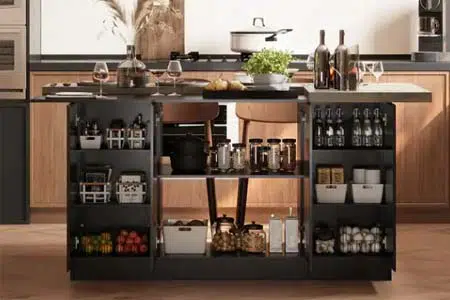
If you will be spending most of your kitchen time cooking, the island should be configured to have a food prep island. Food prep islands need surfaces that will stand up to daily chopping, mixing, and accidental spills.
Countertop Options:
- Quartz: Will not stain or scratch, no sealing required
- Granite: Has natural beauty with decent durability when sealed properly
- Butcher Block: The warmth of wood; oil often
You may want to consider providing a prep sink for your workhorse island. The benefit of a small sink will allow you to wash vegetables, rinse tools, and clean up with less movement. Consider placing the prep sink off-center, so you still have a large unbroken space to roll out dough or lay-out ingredients.
Storage should relate to your prep tools. Deep drawers are better sized for heavy pots and mixing bowls than shelves. Add knife dividers or holders for your knives and a place to store cutting boards upright.
The Social Hub: For Dining, Homework, and Entertaining
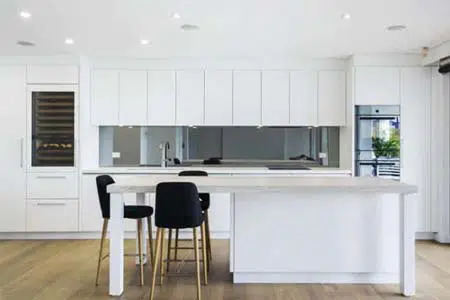
Social hub islands transform into the family gathering area. Kids eat breakfast there, do homework after school, and friends are hosted on occasions.
Seating becomes the key consideration. Allow 24 inches of width at the eating side per person. A family of four needs at least 8 feet of seating. The countertop should hang over the base of the island by 12 inches to 15 inches so people are not bumping their knees.
Also place electrical outlets throughout the sides or back of the island, but not on the eating side. Kids need a place to charge phones and laptops while doing homework. Hidden pop-up outlets work well too because they are out of sight when not needed.
Pick the counter height (36 inches) for homework or eating with kids at the island, as opposed to bar height (42 inches). Counter height stools provide for more comfortable seating if sitting for extended periods of time.
The Storage Powerhouse: To Declutter Your Kitchen
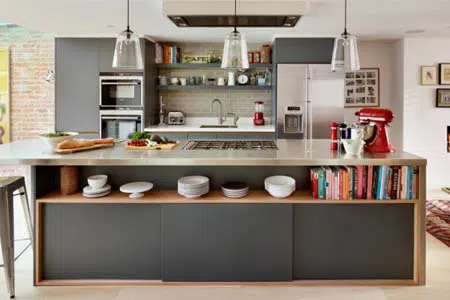
If your counters are constantly covered with appliances, and the cabinets can barely contain the dishes, you might want to consider a storage-centered island. Storage islands can hold as much as a full wall of cabinets.
Design storage around your specific needs:
- Dep drawers for pots, pans, and large mixing bowls
- Pull-out trash and recycling, which allow you to free up other cabinet space
- Appliance garages to hide coffee makers and toasters
- Open shelving on one end for cookbooks and decorative items
Work with a custom cabinet maker like AJ Flying to design storage that specifically fits your items. Standard cabinets commonly wasted space with fixed shelves that do not reflect how you need to store.
Include a combination of drawer sizes. Good for utensils and smaller items include wide, shallow drawers. Heavy cookware can be easily stored in deep drawers. Use medium drawers to hold dishes and food containers.
The Culinary Center: For the Serious Home Chef
Cooking islands may house cooktops, built-in appliances, or specific features for serious cooks. Cooking islands usually work best in larger kitchens where the kitchen work triangle can accommodate another cooking area. A cooktop island needs adequate ventilation. Island range hoods require more power than wall-mounted hoods because they are unable to utilize the wall as support. Plan for required ventilation while designing, not after installation!
Examples of cooking-focused features to consider for your island include:
- Induction cooktop for precise temperature control
- Built-in griddle for cooking breakfast
- A prep-sink separate from the main clean-up sink
- A warming drawer to keep serving temperature food warm
Keep in mind that cooking islands will need heat-resistant surfaces and surfaces that are easy to clean. Light colors are best avoided as they can show every splatter.
The Hybrid
Many families are choosing hybrid islands that include multiple functions (two and three are most common) and different layers or surfaces. An example of a hybrid island would be three functions: prep space, casual seating, and extra storage. This will work, but designing and planning is particularly important for hybrid islands because you have to maintain the integrity of any one of the functions. You need to establish which function is most important to your family, then add the other features.
Is prep work the most important? You will design the prep area first, and find some room for seating. Is storage the most important? You will plan the cabinet layout for storage first, and have a small eating area.
Hybrid islands often work especially well when they include some sort of change in elevation or different materials to signify separation of different functions.
Size & Spacing: The Rules of the Room
Getting the size wrong ruins even the most beautiful island. Too small, and it doesn’t add enough function. Too large, and it blocks traffic flow and makes the kitchen feel cramped.
Measure Your Clearances: The Most Critical Step
The basic rule of thumb is 42 inches between the island and other countertops, cabinets or walls. This gives you one person enough space to work.
If there are two people regularly cooking in the kitchen, consider allowing for a clearance of at least 48 inches. The additional 6 inches on both sides will eliminate the scenario of the “kitchen dance” because we are constantly having to squeeze past one another.
When designing the kitchen work triangle, (the pathway between the sink, refrigerator, and stove,) the most ideal scenario is that the island does not obstruct the pathway. If an island configuration blocks this triangle, you will create traffic congestion during the most critical times in the kitchen.
Consider measuring these clearances:
- Island space to main counter space: 42 – 48 inches minimum
- Island space to refrigerator: 42 inches minimum (more if the refrigerator opens in the direction of the island)
- Island space to doorways: 36 inches minimum for single doorways and 42 inches for primary traffic pathways.
Determine the Island’s Footprint
Now that you understand your clearance needs, you can determine how large your island can be. Measure your space and deduct your clearance areas to determine the largest possible size.
The average island size for different kitchen sizes is;
- Small kitchens: 4′ x 2′ (2 seating)
- Medium kitchens: 6’ x 3’ (3-4 seating)
- Large kitchens: 8′ x 4′ or greater (4+ seating)
To make it easy for yourself use painter’s tape and lay out the foot print of your island on your floor. Live with it for a few days. Walk around your island as you go about your normal day in the kitchen. Open the refrigerator, dishwasher, and oven doors to see if the doors clear your island. If not, move the tape around until you feel happy, until you are satisfied you have the layout you want.
When determining comfortability, bear in mind that the length of your island determines the number of people you can seat. For a comfortable eat-in option allow 24” for each person. An 8′ island overall would provide seating for 4 on one side, or 2-3 if you wrap seating around the corner.
Consider Scale
The size of your island should feel proportional to your kitchen size. An oversized island in a small kitchen can feel cumbersome, and a small island in a large kitchen can feel out of place.
Here are a few scale guidelines:
- The island should be approximately 1/3 the length of your main counter run
- Islands longer than 10 feet should have support posts or columns
- Very wide islands (greater than 4 feet) can feel like a barrier in a smaller kitchen
Visual weight is also a factor. Dark colors and thick countertops can make your island feel bigger. Light colors and thin profiles can make your island feel smaller. Using two-toned kitchen cabinets can help a large island feel less heavy.
Designing the Details: Style & Materials
Your island’s style and materials set the tone for your entire kitchen. These choices affect both appearance and daily function.
To Match or To Contrast?
You really have two main ways to approach your island and cabinet project: have the island match your existing kitchen cabinets in style and color, or have your island contrast and provide a different color or different material.
Matching cabinets creates cohesion. Have your island match your existing kitchen (in size and construction quality) in style, material and hardware. This is an effective approach in small kitchens. In small kitchens, the various different elements “compete” with each other and it can feel busy. Additionally, if you change your kitchen elements later (e.g. change your range hood or countertop) by matching, your island will not look outdated with your old kitchen elements regardless of future changes.
Contrasting cabinets creates interest! Use a different color, a different material, or a different style to highlight that your island is the main focal point of the kitchen. Common contrasting examples include:
- A white kitchen with a navy blue island
- A kitchen with light wood cabinets and a painted island
- Shaker cabinets on perimeter with slab doorsvon island
AJ Flying specializes in custom cabinet combinations that provide a beautiful contrast with high-quality construction and functionality throughout.
Choosing a Countertop
Your selection of countertop material will vary appearance, upkeep, and cost. All materials have merits and detriments.
Quartz is the best combination of low maintenance and durability, it doesn’t need sealing, it’s highly resistant to stains, scratching, and heat. Quartz comes in MANY colors and patterns, even ones that mimic natural stone. The major detraction is cost, particularly, quartz is more expensive than granite or other natural stones.
Granite is beautiful and offers natural beauty while offering decent durability if sealed. Every slab offers unique colors and patterns. Granite is good for heat resistance, and e can withstand scratches from average use, but it must be sealed every 1-2 years for stains. Light-colored granites may stain more easily than darker granites.
Marble is a gorgeous and traditional surface, however it has a lot of maintenance, and it does stain and etch (with lemon juice or wine for example). A lot of people are willing to accept this “patina” for the character of marble. Marble is best for clients who have embraced the idea of maintenance, or who mostly use their island for aesthetic rather than functional purposes.
Butcher block is warm and natural. Wood is also more affordable than stone material and we can sand and repair it if it gets damaged. Butcher block requires routine oiling and doesn’t handle heat and moisture as well as stone. Butcher block is appropriate for islands used for food prep, not (wet) activities.
And, don’t forget about the edge profile. These are the standard edges:
- Straight edge: Very clean and modern
- Beveled edge: Slight angle on the edge softens the look
- Waterfall edge: The countertop continues down the side for dramatic effect
Hardware & Finishes
Cabinet hardware – handles and knobs – might seem like small details, but they affect both function and style.
Match your island hardware to your existing kitchen hardware for a cohesive look. If you want to mix metals, follow the mixing metals guide to avoid clashing finishes.
Popular hardware finishes:
- Brushed nickel: Neutral and timeless
- Black: Bold and modern
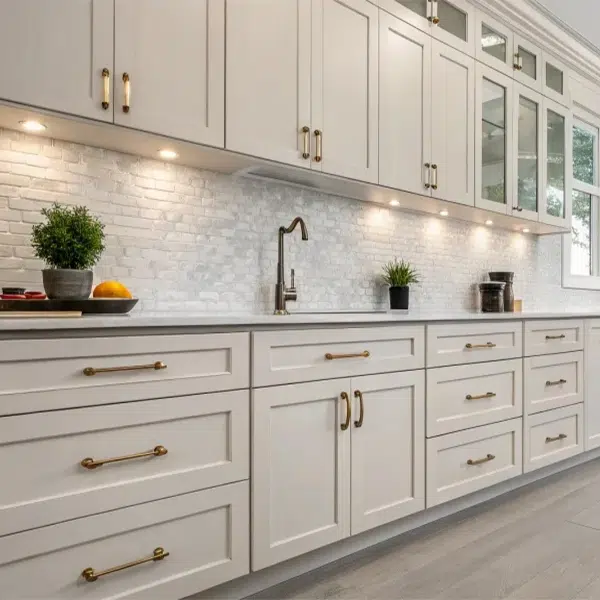
- Brass: Warm and traditional
- Stainless steel: Matches stainless appliances
Choose hardware that fits your hand comfortably. Large drawers work better with long pulls that distribute weight. Small drawers and doors can use either knobs or shorter pulls.
Consider the cabinet door style when selecting hardware. Shaker cabinets look good with both traditional and modern hardware. Flat-panel doors typically work better with contemporary hardware styles.
Power, Light, and Seating: The Functional Features
These practical elements determine how well your island works for daily life. Plan them early in the design process, not as afterthoughts.
Lighting is Key
Good lighting will ensure your island is usable and beautiful. Most islands need task lighting directly above the areas where you will be working, plus general lighting for the area surrounding your island.
Pendants are the most common lighting choice for islands, as they provide focused light for food prep and eye-pleasing visual anchors in the space.
Pendants should be installed with the following rules:
- Hang pendants 30-36 inches above the countertop surface
- Space pendants 24-30 inches apart (center to center, NOT from edge of pendant)
- Use odd numbers (1,3, or 5 pendants) for visually balanced systems
- Choose a pendant that is 12-20 inches wide for most islands
With an 8-foot island three pendants, instead of two will have a better appearance. You will want to hang the outer pendants to align reasonably with the edge of your eating areas or work zones.
It is necessary to consider pendant size, particularly with regard to your island. If you use small pendants, they may look lost over large islands. Large pendants may not match well with small islands, and may block with sight lines across the kitchen.
Electrical Planning
When planning for electrical outlets, plan for more than you think you’ll need. Islands are used for food prep, homework, holiday decorating, etc.
Ways to position your outlets are:
- Side panels – easy to install and visible but still functional
- Pop-ups – hidden until in use, more costly
- Back panel – excellent for permanently plugged-in appliances
- In-drawer – convenient for device charging stations
You need at least two 20-amp circuits for your island’s outlets; one for general outlets (although these mostly will be used for food prep and the second circuit for appliances, built-in appliances such as microwaves and dishwashers).
GFCI protection is required for your island’s outlets. While your electrician will take care of this portion you need to plan for it.
Plan to put your outlets where you need them based on the primary function of your island. A prep-focused island will need the outlets close to the work area (the food and prep area), while an island that serves as a social hub needs the outlets within reachable areas from the seating but away from the food service area.
Seating Smarts
Comfortable seating turns your island into a gathering place. Get the dimensions right, and people will naturally congregate here. Get them wrong, and the space won’t get used.
Stool height matters:
- Counter height (24-26 inches): Pairs with 36-inch counter height
- Bar height (28-30 inches): Pairs with 42-inch bar height
Counter height stools work better for long periods of sitting, homework, and meals. Bar height creates a more casual, pub-like feel but can be less comfortable for extended use.
Spacing and clearances:
- Allow 24 inches of width per person along the counter
- Provide 12-15 inches of knee space under the counter overhang
- Leave 6-9 inches between the stool seat and counter bottom for leg clearance
For a family of four who will eat breakfast at the island regularly, plan for 8 feet of seating space (4 people × 24 inches each). This allows comfortable elbow room and makes meal service easier.
The counter overhang depth affects comfort. 12 inches works for light snacks and drinks. 15 inches provides comfortable knee space for meals. More than 15 inches may require support brackets to prevent sagging.
Don’t Forget the Appliances
While built-in appliances offer functionality for your island, options involving appliances require careful planning for installation and usage.
Microwave drawers are great for islands as they don’t need clearance overhead as standard microwaves. Typically, they should be positioned 12-15 inches below the counter surface and often turn out to be the distance for personal comfort and bench height. Placing the microwave drawer here makes removing hot dishes easy without trying to reach overhead.
Dishwashers in islands can facilitate party cleanup too by shaving time off of the trips back to the sink. They are best used in larger kitchens where the island is further away from the primary dishwasher. Do not forget to ensure adequate plumbing access as well as consider noise.
Wine refrigerators and beverage centers make your island an entertainment space. These work well positioned in the base of bar-height component sections for easy access and not intruding food prep space.
Warming drawers are also a good solution to the problem of keeping prepared food at serving temperature while completing preparation for the large family meal or party. Warming drawers serve the extra purpose of being a tool in already busy families while balancing children and entry into a meal as well as holding side dishes to finish main course preparations.
Remember that built-in appliances still require their own electrical connection and some require plumbing and ventilation habits. Plans for these in the utilities during a design phase will save on time and money for some very expensive modifications.
Conclusion
A well-conceived kitchen island is the hub of your home – the place for morning coffee, work from home, and friends during dinner parties. The difference is careful planning on how it will function first, and beauty will follow.
At AJ Flying, we have been helping families plan their custom kitchen islands to suit their needs. Our factory in China applies a combination of traditional craftsmanship with modern manufacturing methods to create kitchen cabinets and kitchen islands that are built to last for many years.
Are you interested in designing your dream kitchen island? Contact us for a consultation and let us help you plan an island to be the perfect hub for your family’s daily life for many years to come.
Related Resouces:
- Kitchen Island Design Ideas – Pinterest
 English
  German
  French
  Spanish
  Portuguese
  Turkish
  Dutch
Dutch