
Introduction
Scandinavian design has remained in vogue for many years as it addresses a problem – how to design the kitchen aesthetically without sacrificing functionality. The ‘Form Meets Function’ concept means that when designing your cabinets in the Scandinavian way, they need to be appealing and user-friendly.
This guide will give you all the details you need to know about Scandinavian kitchen cabinets; from the general outlook to specific design elements that will give you the modern utopian look.

Nordic kitchens derive their inspiration from the Nordic region, including Sweden, Norway, Denmark, and Finland. They feature sleek and modern designs, light-colored schemes, and natural materials. The design emphasizes utility without sacrificing visual appeal.
Nordic kitchen cabinets, drawers, and shelves all exist primarily to simplify your day-to-day cooking processes and do not have the purpose of merely being a decorative element; therefore, when you walk into a Nordic kitchen, it feels very spacious and open, as well as light and airy.
Scandinavian kitchen design is characterized by the following:
| Feature | What It Means |
| Minimalist Layout | Only necessary items are visible; everything else has a specified storage location. |
| Bright and Airy | Light wood, white walls, and large windows to maximize natural light. |
| Natural Elements | Wood grain, stone, and plants create an outdoor feel indoors. |
| Functional Design | All cabinet and drawer space is organized to provide easy access to items used on a daily basis. |
| Sustainability | Use of FSC-certified wood, and durable materials built to last for years – not just a few months. |
When you follow these design elements, creating your own Scandinavian kitchen becomes straightforward. Each choice builds on the last to create the complete look.
The Color Palette

White is the principal color for Scandinavian kitchens. Understand the Scandinavian winters: there isn’t much daylight, so every light source is reflected by the white walls and the white base cabinets.
But Scandinavian kitchens aren’t all white. Light but neutral colors add some character without making the room feel dark:
- Agreeable greige (gray-beige) — for the walls and/or upper cabinets
- Soft sage green brings a hint of nature’s wellbeing
- Subtle dusty blue introduces color without being too loud
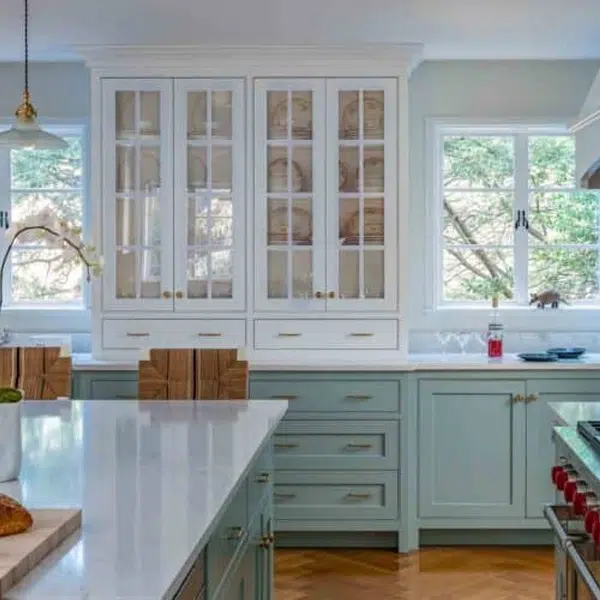
Matte black hardware is often chosen for the lower kitchen cabinets. This is because it can add visual weight for the bottom kitchen, and make the upper cabinets look more brighter.
Materials and Textures

Light wood is important for Scandinavian kitchens. Common types of light wood include:
- Ash – pale wood with visible grain
- Beech – slightly pinkish wood with a smooth surface
- Pine – budget-friendly wood with warm knots
- White oak – durable for cabinets with subtle grain
Using earthy wood finishing in kitchen cabinets helps keep sterile kitchens feeling warm. The wood grain creates understated visual intrigue without the need for trims or hardware.
Scandinavian design favors matte surfaces. Glossy surfaces make light bounce off aggressively, which is unpleasant. The difference between glossy vs matte kitchen cabinets is quite pronounced – matte surfaces are more tranquil.
Key Cabinet Styles
Slab (Flat-Panel) Doors
Slab style is the traditional choice for a Scandinavian cabinet. Slab cabinets are flat, with no contours or carvings. They are easy to clean – there are no recesses, and dirt cannot get stuck. Compared to shaker-style cabinets vs flat panel cabinets, flat panels look the cleanest.
Modern Shaker
Shaker kitchen cabinets can fit in Scandinavian decor if you opt for the thin-rail variety. Classic Shaker doors are bulky and do not look good. Thin-rail modern Shaker doors impart some texture but are not too barn-like. White shaker kitchen cabinets or gray shaker kitchen cabinets would work well in thin-rail styles for Nordic interiors.
You can also understand the difference between framed and frameless cabinets. The latter (which are also referred to as European cabinets) will work better since they are sleeker and have more room inside.
Functionality
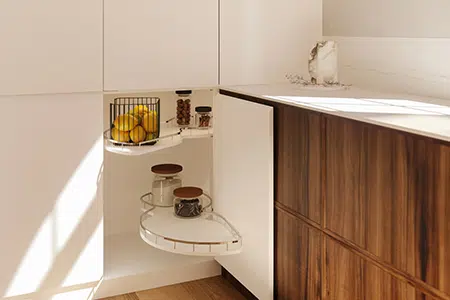
The contents of your cabinets are just as important as their appearance. Scandinavian entries have put a lot of thought into the content of cabinets.
Smart Storage Solutions:
- Pull-Out Pantry Cabinets help you quickly locate items in the back.
- Deeper Drawers help store heavy cookware, etc. than Shelving.
- Hidden Spice Racks Keep Counters From Being Cluttered.
- Corner Lazy Susans (or alternatives) provide space-saving solutions for awkward spaces.
The decluttering principle is simple if you don’t have a cabinet home for it you probably don’t need it. A clear countertop is not just for looks; it allows you to have an actual work surface when preparing meals.
Open Shelving vs Closed Cabinets
Some people use shelving to showcase their beautiful dishes or coffee cups. This is fine if you’re using your dishes for the primary reason and they look good. Everything else should be placed inside wall cabinets in your kitchen. The key is determining what should be on display.
When designing your kitchen, consider the kitchen work triangle, the path between your sink, stove, and refrigerator. Scandinavian kitchens keep this work triangle open.
Hardware and Finishing Touches

Hardware Choices:
- Use slim pulls rather than chunky style
- Use matte black to play off of today’s modern color.
- Incorporate brass or copper accents to add warmth.
- Add leather tabs to drawers as an additional unique detail.
You can combine different meatal finishes and styles in your kitchen, such as using matte black cabinet pulls with polished brass fixtures and pendant lights, but the entire space should have a consistent look (either polished or matte for all hardware, etc.).
Countertop Pairings:
Match your cabinets with natural material-color coordinates, such as:
- Light-colored quartz (white/cream)
- Butcher block wood for warmth
- White/light-gray marble
- Black with white oak cabinets for contrast
Lighting

Nordic countries get minimal sunshine during the year, so layered lighting is crucial:
Lighting Layers:
- Natural light – keep windows free or use sheer draperies
- Pendant lights – place them over islands and tables for task lighting
- LED strips under cabinets – brighten the countertops for food prep
Under cabinet lighting improves the usability of your kitchen. Check out how to conceal under cabinet lighting wires to maintain the sleek design.
Good lighting can make white cabinets seem cozy rather than cold.
Plants

Scandinavian culture prizes nature. Even during harsh and lengthy winters, there’s greenery indoors. Herbs in pots on a kitchen counter or trailing plants attached to the wall cabinets are a form of greens in minimalist spaces.
The basic types include:
- Pothos or trailing on wall cabinet tops
- Utensils with small pots of herbs near the sink
- Fiddle-leaf fig or snake plants in corners of a room
Plants cut through the harsh lines of cabinets and countertops, but they correspond to indoor air quality.
Backsplash
Backsplashes in Scandinavian kitchens are kept fuss-free. White subway tiles are often chosen as they’re light-reflective and unobtrusive. White brick-effect tiles add a gentle texture without blocking out light.
Some designers opt for no tile at all and continue the wall paint or a solid surface. The aim is to ensure unobstructed lines of sight. Look at bespoke benefits for kitchen backsplash height. You want to know they’ll measure up.
Conclusion
When you choose Scandinavian-style cabinets, you are making the decision to focus on high-quality cabinets instead of low-priced ones. Every cabinet, drawer or surface in your kitchen should serve a purpose, making your day-to-day cooking easier and creating a space that is current and bright rather than dark and cluttered.
A good kitchen should provide you with a pleasant working environment instead of an irritating one. That is what Scandinavian design provides.
If you want to design a custom-built Scandinavian kitchen, AJ Flying can discuss your requirements with you and provide you with the right solution.
French kitchen design features intricate trim, rounded edges, and complex cabinetry. French country cabinets have protruding panels and embellishments. Scandinavian design eliminates these elements entirely with ample use of flat paneling and straight lines. French kitchens seem more ornate, while Scandinavian seems less sophisticated and down-to-earth.
Japanese uses dark woods, achieves tranquility through asymmetry, and incorporates darkness into designs. While Scandinavian design embraces lighter woods, creates harmony through symmetry, and invites the greatest amount of light possible in their designs.
 English
  German
  French
  Spanish
  Portuguese
  Turkish
  Dutch
Dutch