
Introduction
Your kitchen is too small. Your countertops are cluttered with appliances. Your cabinets are full. Two cooks can’t work at once. Here’s what I’ve come to understand about designing kitchens over the years: a relative lack of space makes the designer think, and that results in a better solution.
A small kitchen means you pick and choose what’s important. You can’t rely on bad design because you’ve got a lot of square footage.
This guide discusses small kitchen design ideas, including various layouts, trends for 2025, storage, and some hacks to make a small kitchen more useful.
Smart Layouts & Flow
The floor plan determines everything. Mess it up, and you’ll be running into cabinets and going in circles for years.
The Kitchen Work Triangle
The kitchen work triangle connects the sink, the cooktop, and the refrigerator. Combined, they cover all the essential kitchen tasks. In a small kitchen design, keep the three sides of the triangle between 4 and 9 feet. Less than 4 is too cramped. More than 9 is too much walking around. When you design a small kitchen, the first thing you measure is the kitchen work triangle. It tells me whether the design will fit or not.
Best Layouts for Small Footprints
The Galley Kitchen

A galley kitchen plan has cabinets along two opposite walls. The passageway should be 42 to 48 inches. It’s ideal for small kitchen remodel inspiration. You made good use of space. Sink and stove on one side, refrigerator on the other. No empty corners. No long trips between areas.
The L-Shape

L-shape kitchen cabinets use two adjacent walls at a corner. This way, you have space and another wall for your cart or table. Corner spaces need difficult storage; either a lazy susan cabinet or pull-out shelves.
The One-Wall Layout

A one-wall kitchen places everything along one wall. It is a design for studio apartments with limited space. The key is to have vertical storage. In a regular kitchen cabinet size, 36 inches in height is typical for base cabinets while wall cabinets range from 30 to 42 inches, but with a one-wall kitchen, the wall cabinet can be placed higher.
Traffic Control
Before locking your layout down, open up every door and appliance on paper. Take your swing. A normal oven door swings out about 20 inches. Your cabinet doors need clearance too.
2025 Design Trends for Small Spaces
Kitchen trends for 2025 flip some old rules. White kitchens are fine, but designers now use bold colors in tight spaces.
Saturated Colors
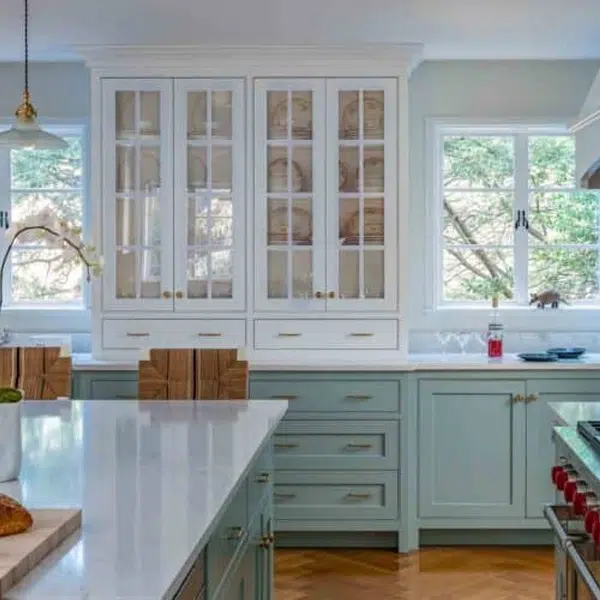
Deep green kitchen cabinets or navy blue create depth instead of closing in the room. I’ve installed dark cabinets in 80-square-foot kitchens that feel bigger than white ones. The color absorbs light in a way that hides the walls. Add this to your list of compact kitchen storage solutions—color changes how you see space.
Hidden Kitchens
Panel-ready appliances blend into your cabinetry. The fridge looks like another cabinet. The dishwasher disappears. What color cabinets match your appliances becomes easier when appliances hide completely. This creates visual calm. Fewer things to see means the room feels bigger.
Mixed Materials
How to mix metals in the kitchen adds texture without taking up space. Brass cabinet pulls, stainless steel appliances, and copper light fixtures work together. Pair kitchen cabinet materials like wood grain base cabinets with smooth painted uppers. Two-tone kitchen cabinets break up the visual weight.
Sustainable & Smart
Compact appliances now come with smart features. Voice-activated faucets help when your hands are full. Energy-efficient models fit in smaller spots. As a manufacturer, AJ Flying builds cabinets that work with these new appliances. Custom sizing means no gaps or wasted inches.
Space-Saving Storage Hacks
Storage makes or breaks a small kitchen. Here’s where you get creative.
Go Vertical
Take your kitchen wall cabinets all the way to the ceiling. That gap above standard 30-inch cabinets collects dust and wastes space. Floor-to-ceiling storage in a china cabinet factory setup gives you room for seasonal items up high and everyday dishes at eye level. Open shelving at the top works for things you rarely grab. This apartment kitchen hack adds 30% more storage without expanding your footprint.
The “Unused” Inch
Small spaces hide storage in weird spots:
- Toe-kick drawers: The 4-inch space under base cabinets fits shallow drawers for baking sheets, cutting boards, and serving platters
- Cabinet sides: Attach magnetic knife strips or small spice racks to the outside panels
- Inside doors: Stick hooks inside cabinet doors for measuring cups, pot lids, or kitchen towels
Multifunctional Furniture
Furniture that moves or folds saves you. A fold-down table mounts to the wall and drops when you need it. Rolling islands on wheels slide under counters or move to the living room as a bar cart. I keep a cutting board that sits over the sink—it creates counter space when I need it and stores flat when I don’t.
Appliance Garages
Kitchen base cabinets can include a dedicated compartment with a door that rolls up. Hide your toaster, coffee maker, and mixer behind it. When you need them, roll up the door. When you’re done, close it and the counter looks clean. This works especially well with frameless cabinets because you get more interior space.
Lighting & Optical Illusions
Light changes how big a room feels. One ceiling fixture isn’t enough.
Layered Lighting
You need three types:
- Task lighting: Under-cabinet LED strips light up your prep area. Without them, you work in your own shadow. Run the wires through the back of the cabinet to keep them hidden.
- Ambient lighting: Overhead lights should dim. Bright light at night makes a small space feel harsh. Softer light at dinner makes it feel cozy.
- Accent lighting: Small lights inside glass-front cabinets or above open shelving add depth.
Reflective Surfaces
High-gloss kitchen cabinets bounce light around the room. A glossy backsplash does the same thing. Even glossy vs matte kitchen cabinets makes a difference—glossy reflects, matte absorbs. Stainless steel and glass tiles work well for this. The reflection tricks your eye into seeing more space.
Flooring Tricks
Run your floor planks lengthwise down the longest wall. This pulls your eye forward and makes the room feel longer. Large-format tiles (12×24 inches or bigger) have fewer grout lines, which makes the floor look bigger. The average size of a kitchen might be 150 square feet, but good flooring makes it feel like 200.
Styling & Decor
The final layer is how you dress the space.
Rug Runners
A runner rug in front of the sink or stove adds softness and draws the eye down the length of the room. Pick one that’s 2 to 3 feet wide and runs most of the length of your galley or one-wall setup.
Curated Clutter
Don’t hide everything. Display your nicest olive oil bottle, a ceramic bowl with lemons, or a wooden cutting board leaning against the backsplash. Three items look intentional. Ten items look messy. Choose quality pieces that add to your design instead of fighting it.
Hardware Upgrades
You can transform the appearance of your cabinets with hardware for less cost, and it is a simple way to accomplish this. The addition of matte black cabinet hardware to white shaker-style kitchen cabinets creates a current, modern look with increased contrast. Meanwhile, linking the brass handles to a dark cabinet provides warmth.
Conclusion
Small kitchens do not mean less style. They just require you to be more ingenious about your needs. Layout, storage, and lighting help make the most of any small space. Using walls and squeezing every square foot will change the way the kitchen works.
Are you remodeling? Get in touch with AJ Flying for tailored cabinets that suit your specifications. We create kitchen cabinets that elevate small kitchens into stylish spaces.
 English
  German
  French
  Spanish
  Portuguese
  Turkish
  Dutch
Dutch